Buying Vintage Jewelry: How to Evaluate an Age or Maker Claim
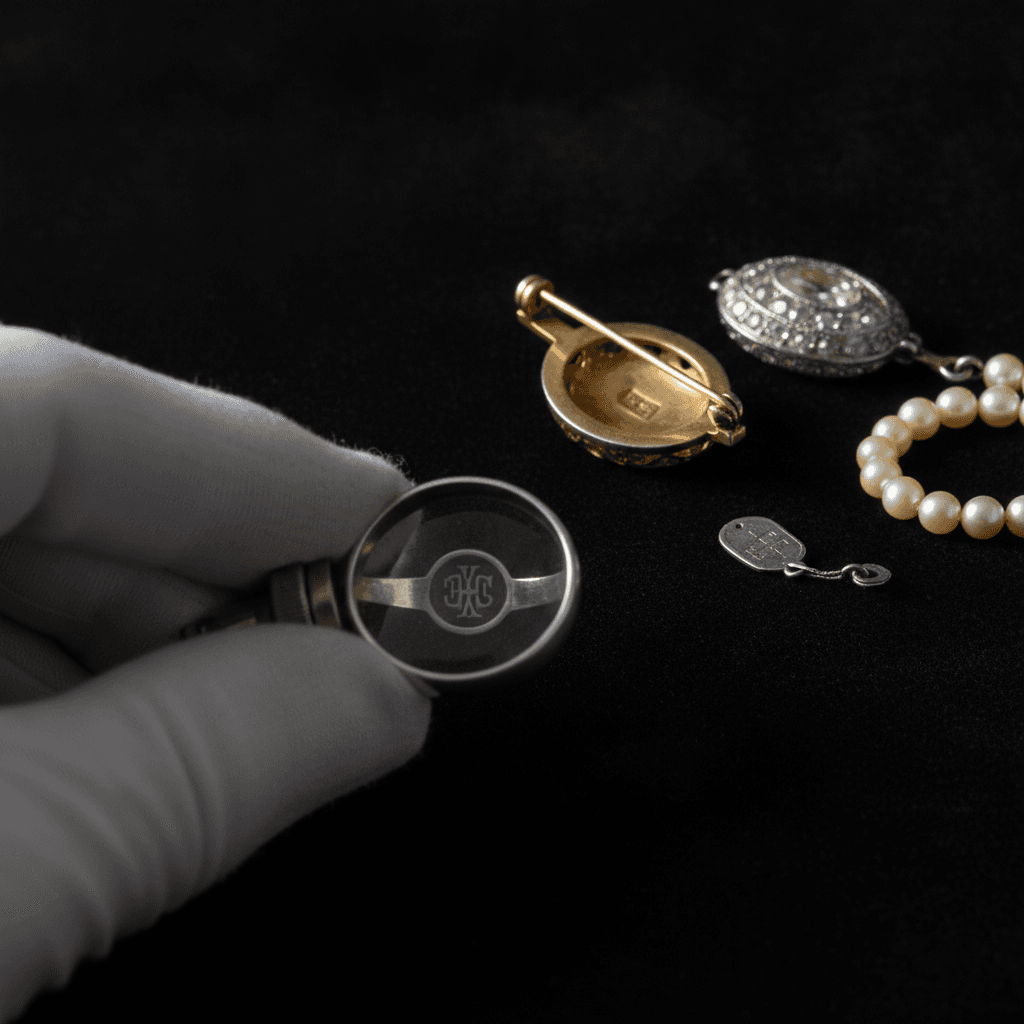
“Vintage” is a claim that needs context
Sellers use vintage, antique, retro, estate, period, revival, reproduction, and vintage-style in inconsistent ways. Do not let a broad label do the work of a date. Ask for the claimed production period, maker, country, materials, alterations, and evidence supporting each statement.
Style can narrow research. An Art Deco-looking geometric ring or Victorian-looking brooch may be from the period, a later revival, or a modern reproduction. Design vocabulary is useful for searching; it is not an authentication method.
Build an evidence set from the whole object
Request photographs of the front, reverse, profile, findings, setting, interior, and every mark. The reverse often reveals construction, repairs, and component differences that a polished front hides. For pairs, photograph both items at the same scale. For a necklace, document chain, clasp, pendant, connectors, and any separate tags.
Ask whether stones, clasps, posts, chains, shanks, or settings have been replaced. A piece can contain genuine old and modern components. Repairs are not automatically bad, but they affect how strongly one feature can support a date and may affect condition, originality, and value.
Hallmarks help only when read correctly
Marking systems change across jurisdiction and time. In the current UK system, for example, a complete statutory hallmark contains a sponsor mark, metal-and-fineness mark, and assay-office mark, while a date letter is optional. U.S. quality marks follow a different framework. A single 925 or 750 number is not a complete worldwide dating code.
Research the full mark, including border shapes and adjacent symbols, using the responsible assay office, government reference, or documented maker archive. Record exactly where it appears. A replaced clasp can carry a later mark; a genuine detachable back can be paired with a different earring; and a fraudulent stamp can imitate a desirable maker. The mark must fit the metal, construction, claimed date, and other evidence.
Patina and wear are not clocks
Surface darkening, scratches, worn engraving, and softened details can be consistent with age, but use, storage, polishing, deliberate antiquing, and repair can create or remove those effects. Uniform darkness is not proof of artificial aging, and brightness is not proof of recent manufacture. Over-polishing can make an old piece look new while erasing marks and finish.
Clasp type, stone cut, solder, tool marks, and setting construction can be useful to a specialist, but none should be turned into a one-feature date rule. Techniques persist, older forms are reproduced, and findings are replaced. Treat each as one part of a converging evidence set.
Check the seller's evidence and your recourse
FTC marketplace guidance recommends checking seller history, actual-item photographs, written return terms, and protected payment methods. Ask for provenance documents, earlier photographs, repair invoices, receipts, laboratory reports, and prior appraisals. Then ask what each document proves. A family account may be sincere yet imprecise; a past appraisal may repeat an attribution without primary evidence.
Get the return window and exclusions in writing. Confirm that you may obtain an independent examination and that normal inspection will not void the return. Save the listing and messages. Avoid cleaning, polishing, sizing, or repair before documentation and any dispute period are complete.
Use the right professional
An appraiser may address a defined value purpose. A gemological laboratory can identify eligible materials or report gem characteristics. A specialist dealer, auction-house department, museum curator, or maker archive may have attribution expertise. No single credential covers every period, brand, material, and legal purpose.
Ask the examiner to distinguish observation, interpretation, and conclusion. A careful opinion should state its evidence and limits rather than promise certainty from one photograph or signature.
A practical pre-purchase checklist
- Translate the listing into specific claims about date, maker, metal, stones, and originality.
- Obtain current photographs of the entire actual object and all marks.
- Request a written condition and alteration history.
- Verify reports and archives at their issuing source.
- Compare sold examples only when material, scale, condition, provenance, and attribution are genuinely comparable.
- Preserve a useful return period and protected payment method.
- Seek independent expertise when the price depends heavily on maker or period.
The responsible takeaway
Vintage jewelry deserves better than a checklist of magical tells. Strong attribution comes from consistent marks, construction, materials, condition, provenance, and expert comparison. When those strands do not align, describe the uncertainty instead of forcing a date.
Want more jewelry knowledge?
Download our app for quizzes, care guides, and AI identification