Buying Estate Jewelry at Auction or From a Dealer: An Evidence Checklist
Estate does not mean antique
Estate jewelry means previously owned jewelry. A piece can be a recent design, a vintage item, an antique, a reproduction, or an object assembled from components of different ages. The word does not authenticate a maker, period, gemstone, or metal. Begin by separating the fact that an item is pre-owned from every other claim made about it.
Write down whether the seller is claiming a specific maker, approximate date, precious-metal fineness, gemstone identity, natural or laboratory-grown origin, treatment status, provenance, or value. Each statement needs its own evidence.
Read the catalog language and contract
Auction houses and dealers use terms with different levels of confidence. “By,” “attributed to,” “style of,” “after,” and “possibly” should not be treated as synonyms. Ask the seller to explain exactly what a description means under its terms of sale. Read the condition-report policy, authenticity warranty, exclusions, return period, dispute process, and any deadline for raising a concern.
At auction, calculate the full amount before bidding. The hammer price may be only one component; buyer's premium, tax, shipping, insurance, import charges, and payment fees can change the final cost. Confirm whether online photographs are color-corrected and whether you can inspect the item or appoint someone to inspect it.
For a dealer purchase, get the material description, restoration disclosure, return terms, and any guarantee in writing. A warm relationship or impressive showroom is not a substitute for specific documentation.
Request evidence for the actual piece
Ask for front, back, profile, clasp, setting, and macro hallmark images. Request a condition report that addresses loose or replaced stones, chips, repairs, altered findings, sizing, missing elements, enamel loss, foil-backed settings, and signs that components may not be original to one another. A polished piece can still have structural problems hidden by a setting.
Preserve boxes, receipts, earlier appraisals, laboratory reports, repair invoices, and ownership records, but evaluate what each document actually establishes. A family story can guide research without proving a date or maker. An old appraisal may describe the item as it appeared then but may use a different value purpose and may not reflect later repairs or replacements.
Read marks in their jurisdiction and component context
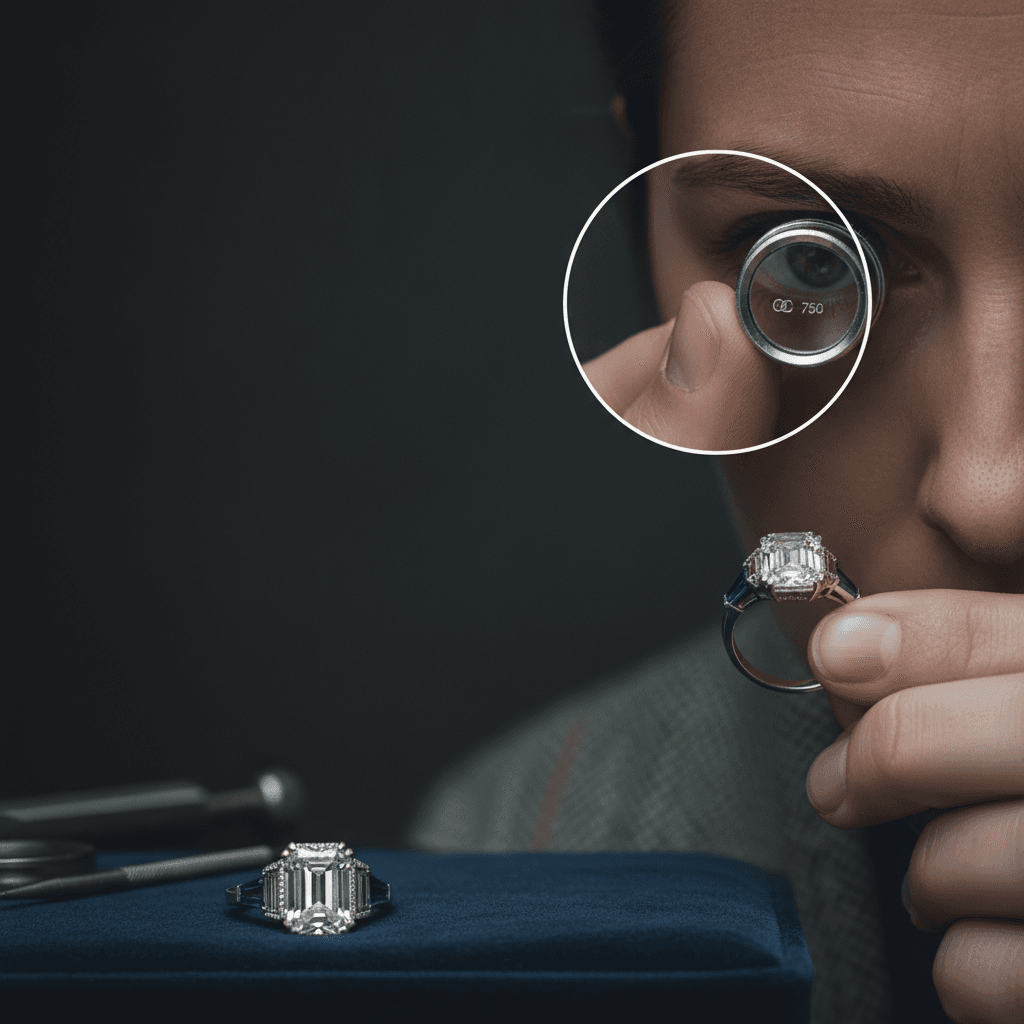
Hallmark systems vary. In the United Kingdom, a complete statutory hallmark includes compulsory components and applies within a regulated system, subject to exemptions. In the United States, FTC guidance describes quality marks and the business identity that stands behind them. A lone 925 or 750 should not be interpreted as a complete international passport.
Photograph the whole mark set and note where it appears. A clasp, chain, pendant, pin, or detachable back can be replaced. A genuine mark on one component does not prove that every attached component shares its age or metal. Counterfeit marks also exist, so use marks as evidence to corroborate construction and provenance rather than as the only test.
Understand laboratory reports and appraisals
GIA's current jewelry services can report observations including an item description, markings, metal-testing results, and diamond information within the limits imposed by a mounting. The exact report service and eligibility matter. A report on a loose gemstone answers a different question from a mounted-jewelry report.
A gemological report is not the same as an appraisal. A report can document identity or quality characteristics; an appraisal addresses a defined monetary purpose, market, and effective date. An auction estimate, dealer asking price, purchase offer, insurance replacement figure, and expected resale proceeds are also different numbers.
Arrange independent examination when stakes are high
For a consequential purchase, choose an independent professional with expertise in the relevant material, maker, or period. Ask what can be evaluated while mounted, which tests may be needed, whether the examination is non-destructive, and what uncertainty will remain. Do this within the written return or claim period.
Do not clean, polish, resize, repair, or remove stones before the condition and return rights are documented. Alteration can destroy evidence and may void a return.
The responsible takeaway
The strongest estate-jewelry purchase is supported by a chain of evidence: precise claims, actual-item photographs, condition documentation, marks read in context, relevant reports, transparent fees, and practical recourse. Romance and history can be part of the appeal, but they should not replace verification.
Want more jewelry knowledge?
Download our app for quizzes, care guides, and AI identification