Understand the evidence behind your jewelry
Start with decision guides, then browse 58 source-backed educational articles with article-specific references and provenance. Move from a visible clue to the right next step without confusing a photo, stamp, report, or asking price with certainty.
Start with your question
These guides connect identification clues to the decision you actually need to make.
Featured source-backed articles
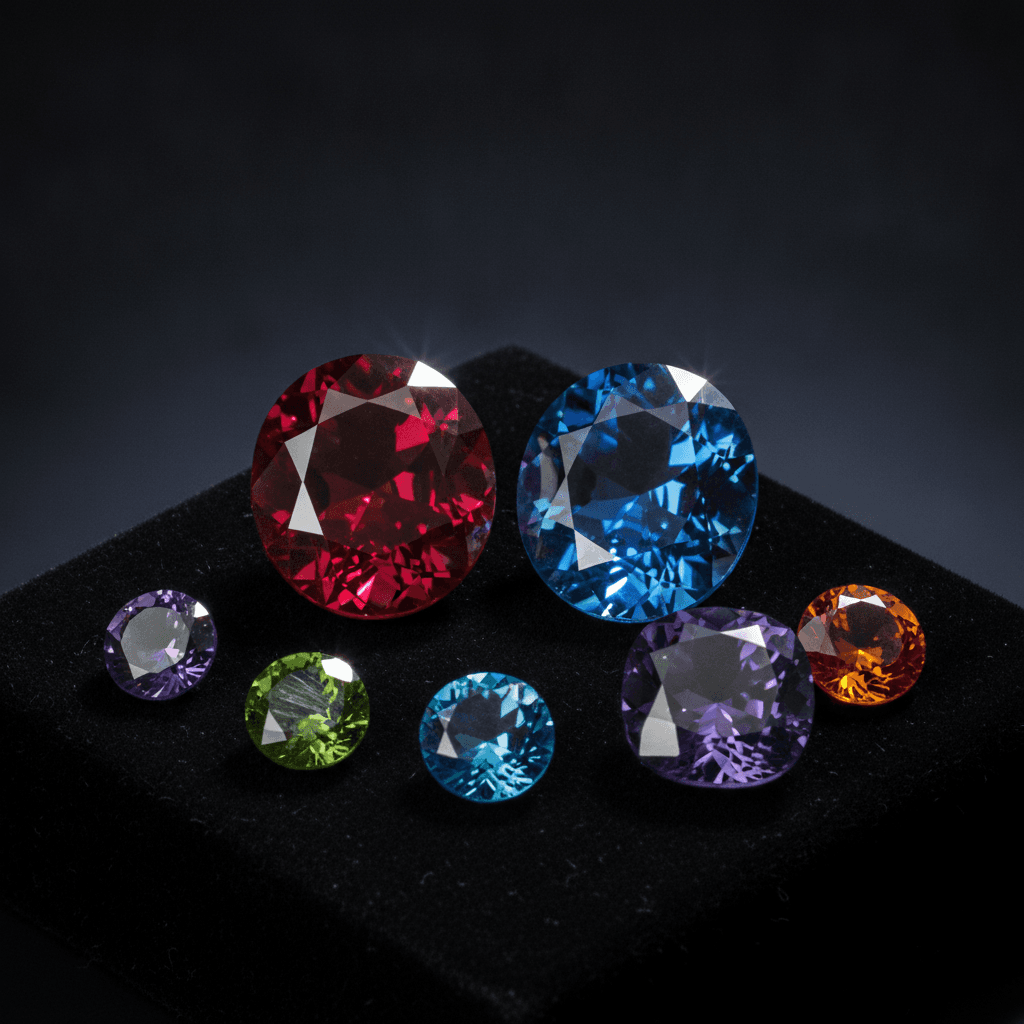
Precious vs. Semi-Precious Gemstones: What the Labels Really Mean
Precious and semi-precious are traditional labels, not a dependable ranking of rarity, durability, quality, or value. Learn what the terms communicate, where they fail, and which stone-specific questions are more useful.
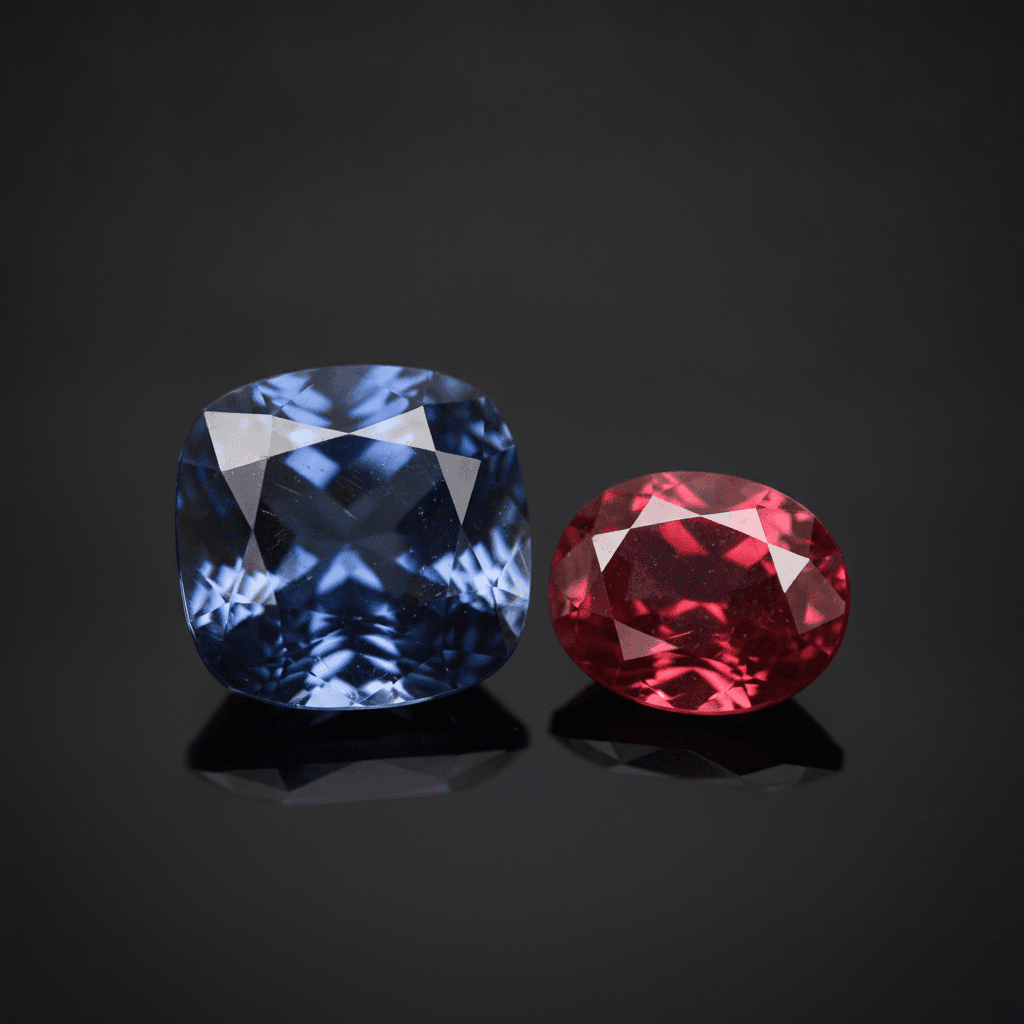
How Colored Gemstones Are Evaluated: Color, Clarity, Cut, and Size
Color, clarity, cut, and size can organize a colored-stone inspection, but there is no single consumer grade that works identically across every gem. Learn how the factors interact and what a laboratory report can actually establish.
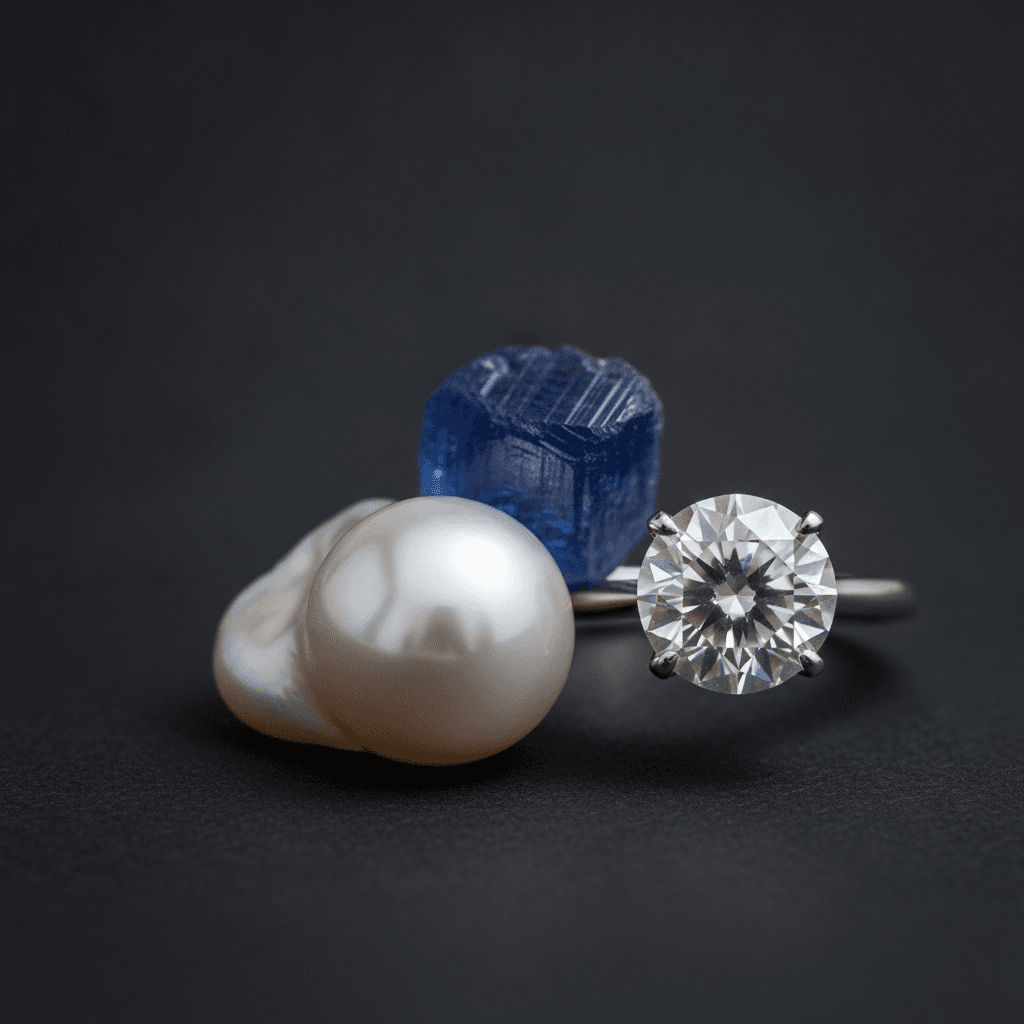
Mohs Hardness Scale for Gemstones: What It Measures and What It Misses
The Mohs scale ranks scratch resistance, not overall gemstone durability. Learn how hardness differs from toughness and stability, why the scale is not linear, and how to make safer jewelry-care decisions.
Gemstones
Gem properties, treatments, grading clues, and setting-aware identification.
Precious vs. Semi-Precious Gemstones: What the Labels Really Mean
Precious and semi-precious are traditional labels, not a dependable ranking of rarity, durability, quality, or value. Learn what the terms communicate, where they fail, and which stone-specific questions are more useful.
How Colored Gemstones Are Evaluated: Color, Clarity, Cut, and Size
Color, clarity, cut, and size can organize a colored-stone inspection, but there is no single consumer grade that works identically across every gem. Learn how the factors interact and what a laboratory report can actually establish.
Mohs Hardness Scale for Gemstones: What It Measures and What It Misses
The Mohs scale ranks scratch resistance, not overall gemstone durability. Learn how hardness differs from toughness and stability, why the scale is not linear, and how to make safer jewelry-care decisions.
Jadeite vs. Nephrite: Jade Types, Treatments, Care, and Cultural Context
Jade is an umbrella term for jadeite and nephrite, with different structures, colors, treatments, and market conventions. Learn what those names mean, why home tests are unreliable, and how to document jade responsibly.
Turquoise Jewelry: Color, Matrix, Treatments, Care, and Southwest Context
Turquoise can contain matrix and may be impregnated, dyed, coated, reconstructed, or imitated. Learn what photos can document, what they cannot prove, how treatment affects care, and how to discuss Southwest jewelry precisely.
Amethyst Jewelry Guide: Color, Quality, Treatments, and Care
Amethyst is purple quartz whose appearance depends strongly on color, zoning, cut, and lighting. Learn what to look for, how natural and laboratory-grown material are separated, and how to care for amethyst safely.
Topaz Jewelry Guide: Colors, Treatments, Durability, and Care
Topaz occurs in many colors, and much blue topaz is produced by irradiation followed by heat. Learn how trade names, treatment, cleavage, cut, and care affect a topaz purchase.
Garnet Colors and Varieties: A Practical Jewelry Guide
Garnet is a group of related minerals found in red, orange, green, purple, and color-change varieties. Learn the main names, quality factors, durability limits, and why color alone cannot identify a garnet.
Aquamarine Jewelry Guide: Color, Heat Treatment, Quality, and Care
Aquamarine is the blue to greenish-blue variety of beryl. Learn how color, clarity, cut, heat treatment, durability, and laboratory reports affect an aquamarine purchase and care plan.
Tourmaline Colors and Varieties: Quality, Treatments, and Care
Tourmaline is a mineral group with an unusually broad color range, including zoned and copper-bearing varieties. Learn how color names, laboratory origin opinions, treatments, durability, and care affect a purchase.
Tanzanite Guide: Color, Heat Treatment, Durability, and Buying Questions
Tanzanite is the blue-to-violet variety of zoisite commercially mined near Merelani, Tanzania. Learn about pleochroism, routine heat treatment, quality factors, care, and the limits of scarcity claims.
Opal Play-of-Color: Patterns, Quality Factors, Treatments, and Care
Precious opal displays play-of-color as light diffracts through ordered silica structures; common opal does not. Learn how pattern, brightness, bodycolor, construction, treatment, and care affect an opal.
Alexandrite Color Change: Natural, Laboratory-Grown, and Imitation Stones
Alexandrite is a color-change variety of chrysoberyl, but color change alone does not prove natural alexandrite. Learn how lighting, quality factors, synthetics, simulants, reports, durability, and care fit together.
Natural vs. Cultured vs. Imitation Pearls: What Testing Can Show
Cultured pearls are real pearls formed with human intervention; natural pearls form without it, and imitations are different materials. Learn why surface tests are inconclusive and how laboratories use X-radiography and other methods.
Sapphire Colors Beyond Blue: Fancy Sapphire, Treatments, and Quality
Sapphire is corundum in blue and many fancy colors; red corundum is classified as ruby. Learn how color terminology, heat and diffusion treatment, origin reports, durability, and care affect a sapphire purchase.
Emerald Treatments Explained: Oil, Resin, Reports, and Care
Many emeralds have surface-reaching fissures filled with oil or resin to improve apparent clarity. Learn how laboratories report clarity enhancement, what sellers should disclose, and how treatment changes care.
Ruby vs. Red Spinel: Differences, Look-Alikes, and Reliable Testing
Ruby and red spinel are different minerals whose colors can overlap. Learn why hue, fluorescence, facet doubling, and inclusions are not safe home verdicts, and what independent laboratory testing can establish.
Diamond Clarity Grades Explained: FL, IF, VVS, VS, SI, and I
The GIA clarity scale contains 11 grades based on inclusions and blemishes assessed by skilled graders at 10× magnification. Learn what each category means, what eye-clean does not mean, and how to read a report responsibly.
Metals & Hallmarks
Gold, silver, platinum, plating terms, and hallmark context.
Jewelry Metal Allergies: Nickel, “Hypoallergenic” Labels, and Safer Choices
Nickel is a common cause of allergic contact dermatitis, but a jewelry label or photo cannot diagnose an allergy or guarantee compatibility. Learn what to document, what material claims mean, and when to see a dermatologist.
Gold Plated vs Gold Filled vs Karat Gold: What the Terms Mean
Gold plated, gold filled, vermeil, hollow karat gold, and solid karat gold describe different constructions. Learn how to read the full mark, avoid lifespan promises, and choose the right evidence for care and value.
Why Silver Tarnishes: Chemistry, Color Stages, and Clues
Silver reacts with sulfur-containing gases to form a thin tarnish layer. Its yellow, red-brown, blue, and black stages reflect film thickness, but color alone cannot prove purity, plating, age, or authenticity.
Titanium, Tungsten, and Stainless-Steel Rings: What Buyers Should Compare
Alternative-metal rings differ in weight, brittleness, resizing, alloy composition, finish, and repair options. Learn why “indestructible” and “hypoallergenic” are overclaims and what to confirm before buying.
What Is Rose Gold? Karat, Copper, Color, and Hallmark Clues
Rose gold is a gold alloy whose pink tone usually comes from copper, sometimes with silver. Its exact recipe varies, so color cannot establish karat or authenticity; use the full quality mark and appropriate testing.
Jewelry Hallmarks by Country: Why the Same Stamp Can Mean Different Things
There is no single worldwide hallmark system. Compare the official UK hallmark, U.S. quality-mark framework, and Convention Common Control Mark, then use a repeatable process for researching jewelry from another country.
What Metals Are Mixed With Gold and Why Alloy Recipes Matter
Gold alloys combine a stated gold proportion with metals chosen for color and manufacturing needs. Learn how copper, silver, zinc, nickel, palladium, coatings, and production choices change a piece without assuming one universal recipe.
Platinum vs White Gold: Composition, Wear, Maintenance, and Marks
Platinum is a naturally white precious metal; white gold is a gold alloy often rhodium plated. Compare fineness, weight, surface wear, maintenance, skin sensitivity, repair, and current cost without fixed-price claims.
You Found a 925 Stamp: How to Verify the Jewelry Next
A 925 stamp is a fineness claim, not final proof of the whole object. Photograph its context, identify the marking system, inspect construction and wear, verify the responsible mark, and choose proportionate testing.
10K vs 14K vs 18K vs 24K Gold: A Practical Comparison
Compare 10K, 14K, 18K, and 24K gold by gold proportion, common fineness marks, color range, wear considerations, price inputs, and best-use questions without treating karat as a complete quality score.
Styles & Eras
Design vocabulary for periods, construction, motifs, and revivals.
Vintage vs. Antique Jewelry: What the Labels Actually Mean
Antique has a specific over-100-year meaning in some customs rules, while vintage is a flexible market label. Learn how to describe older jewelry without turning an age estimate into an authentication or value claim.
What Is Statement Jewelry? A Visual Identification Guide
Statement jewelry is defined by visual or conceptual emphasis rather than a fixed size. Learn how scale, placement, contrast, material, movement, and relationship to the body help describe a bold piece accurately.
Minimalist Jewelry: How to Recognize Restraint in Form
Minimalist jewelry uses reduction, proportion, material, and negative space rather than fixed chain or pendant sizes. Learn to describe minimalist influence without confusing simplicity with age, quality, or value.
Contemporary Jewelry: Materials, Ideas, and Modern Movements
Contemporary jewelry can prioritize concept, body, process, and unconventional materials as much as preciousness. Learn how studio, art, modernist, and contemporary labels overlap—and how to document a piece responsibly.
Belle Époque Jewelry: Garland Style, Platinum, and Dating Clues
Belle Époque jewelry overlaps with French Art Nouveau, British Edwardian design, and the Garland style. Learn which visual clues support the label, what the dates mean, and why photographs cannot confirm age or authenticity.
Georgian Jewelry: Dates, Design, and Identification Clues
Georgian jewelry spans a long, varied period rather than one fixed look. Learn how court diamonds, closed settings, early nineteenth-century naturalism, construction, provenance, and later revivals affect identification.
Edwardian Jewelry: Platinum, Garland Motifs, and Identification
Edwardian jewelry is associated with British elite design around 1900–1915, especially platinum, diamonds, pearls, symmetry, and Garland motifs. Learn how to separate style clues from proof of period or material.
Mid-Century Modern Jewelry: 1950s–1960s Identification Guide
Mid-century jewelry includes gem-rich fine jewelry, abstract studio work, Scandinavian modernism, and experimental materials—not one uniform look. Learn how to document form, maker, construction, and date.
Retro Jewelry of the 1940s: Identification and Dating Clues
Retro jewelry developed around the Second World War with substantial gold, softened geometry, curves, color, and versatile forms. Learn how it differs from Art Deco and 1950s jewelry—and why style alone cannot prove age.
Art Deco Jewelry: Geometry, Color, and Identification Clues
Art Deco jewelry is associated with modern geometry, dense gemstone settings, international influences, and 1920s–1930s design. Learn how to distinguish period work from Edwardian pieces and later revivals.
Art Nouveau Jewelry: Nature, Enamel, and Identification Clues
Art Nouveau jewelry used sinuous lines, natural forms, figures, enamel, glass, horn, opal, and expressive craftsmanship around the turn of the twentieth century. Learn how to distinguish it from Garland and later revival work.
Victorian Jewelry: Periods, Motifs, and Identification Clues
Victorian jewelry spans Queen Victoria’s 1837–1901 reign and includes revival, naturalistic, sentimental, mourning, mass-produced, and artistic work. Learn how to identify clues without relying on a simplified three-period formula.
Jewelry Care
Conservative cleaning, storage, wear, and maintenance guidance.
Traveling with Jewelry: A Practical Safety Checklist
Reduce loss, theft, scratching, and customs confusion when traveling with jewelry. Use a carry-on, document valuable pieces, check insurance terms, and leave irreplaceable items home when the risk is not worth it.
Professional Jewelry Cleaning vs. At-Home Care
Routine home care can remove light surface soil from suitable jewelry, while a trained jeweler can inspect settings and choose equipment for the actual gem, treatment, and construction. Learn when each option is appropriate.
How to Store Jewelry Without Scratches, Tangles, or Tarnish
Store jewelry by material and construction, separate hard and soft surfaces, support chains and fragile pieces, and use suitable enclosures. Special handling matters for silver, pearls, opals, plated finishes, and heirlooms.
When Should You Take Off Jewelry? Seven High-Risk Situations
Remove jewelry when chemicals, impact, snagging, contamination, temperature change, or loss risk outweigh convenience. This activity-by-activity guide explains why materials and settings change the answer.
How to Care for Pearls Without Damaging the Nacre
Pearls are soft organic gems that can be scratched and affected by heat, acids, cosmetics, and unsuitable cleaners. Learn a conservative routine for wearing, wiping, cleaning, drying, and storing pearl jewelry.
Gemstone Care Guide: Why Mohs Hardness Is Not Enough
Safe gemstone care depends on hardness, toughness, stability, treatments, setting, and construction—not a single Mohs number. Use this decision process before cleaning, wearing, or storing colored-stone jewelry.
How to Store Silver and Remove Tarnish Conservatively
Prevent silver tarnish with clean, dry, low-pollutant storage and examine every component before cleaning. Use the least abrasive suitable method, and refer plated, antique, hollow, or composite pieces to a conservator.
How to Clean Gold Jewelry at Home—When It Is Safe
Warm water, mild soap, and a soft brush can suit some sound gold jewelry, but stones, treatments, plating, adhesives, hollow construction, and antique finishes can change the method. Inspect first and clean conservatively.
Authentication
Evidence, limitations, reports, and appropriate professional next steps.
How to Test Gold and Silver Jewelry: What Each Method Can Prove
Hallmarks, magnets, visual inspection, touchstone testing, and XRF provide different kinds of evidence. Learn why common home tests cannot verify precious-metal purity and when professional testing is worth using.
How to Check a Jewelry Listing Before You Buy Online
A low price or polished certificate is not proof that jewelry is genuine. Use this evidence-first checklist to evaluate seller identity, item photographs, material claims, reports, return terms, and payment protection.
Buying Estate Jewelry at Auction or From a Dealer: An Evidence Checklist
Estate jewelry is simply pre-owned; it is not automatically antique or authenticated. Compare catalog language, condition, marks, reports, fees, return rights, and independent testing before you bid or buy.
Diamond Grading Reports: GIA, AGS Ideal, IGI, and What to Verify
Diamond “certificates” are laboratory opinions, not guarantees or appraisals. Learn what current GIA, AGS Ideal, and IGI reports cover, how to verify a report number, and how to match a report to a stone.
GIA Lab-Grown Diamond Reports: Current Terms and Verification
GIA now uses Premium or Standard quality assessments for qualifying colorless-to-near-colorless laboratory-grown diamonds. Learn how to read current and older documents, verify a report, and separate origin from appearance.
What a Jewelry Appraisal Should Include and How to Choose an Appraiser
A useful jewelry appraisal identifies the exact item, assignment purpose, effective date, market, condition, evidence, method, assumptions, and appraiser. Use this checklist before accepting a one-page value estimate.
Buying Vintage Jewelry: How to Evaluate an Age or Maker Claim
Style, patina, a clasp, or a hallmark can support research but cannot date jewelry alone. Learn how to evaluate vintage listings through construction, marks, repairs, provenance, seller terms, and independent examination.
Gemstone Treatment Disclosure: What Buyers Should Ask and Record
Heat, filling, dye, coating, irradiation, and other treatments can affect appearance, care, and value. Learn the U.S. disclosure framework, why treatment prevalence should not be guessed, and how reports support a purchase.
How to Read Jewelry Hallmarks, Quality Marks, and Maker Marks
A fineness number, maker mark, and official hallmark are not interchangeable. Learn how to photograph a full mark set, identify its jurisdiction, and use each component as evidence without treating a stamp as proof of age or value.
Can You Tell If a Diamond Is Real at Home? What Common Tests Miss
Fog, water, newspaper, sparkle, and setting checks cannot conclusively identify a diamond. Learn what those observations can and cannot tell you, which risky DIY tests to avoid, and when independent gemological testing is the responsible next step.
Put the research into practice
Upload one clear jewelry photo for a limited visual screen, then capture additional angles in the iPhone app when the first image leaves important evidence hidden.
Identify jewelry by photo