Contemporary Jewelry: Materials, Ideas, and Modern Movements
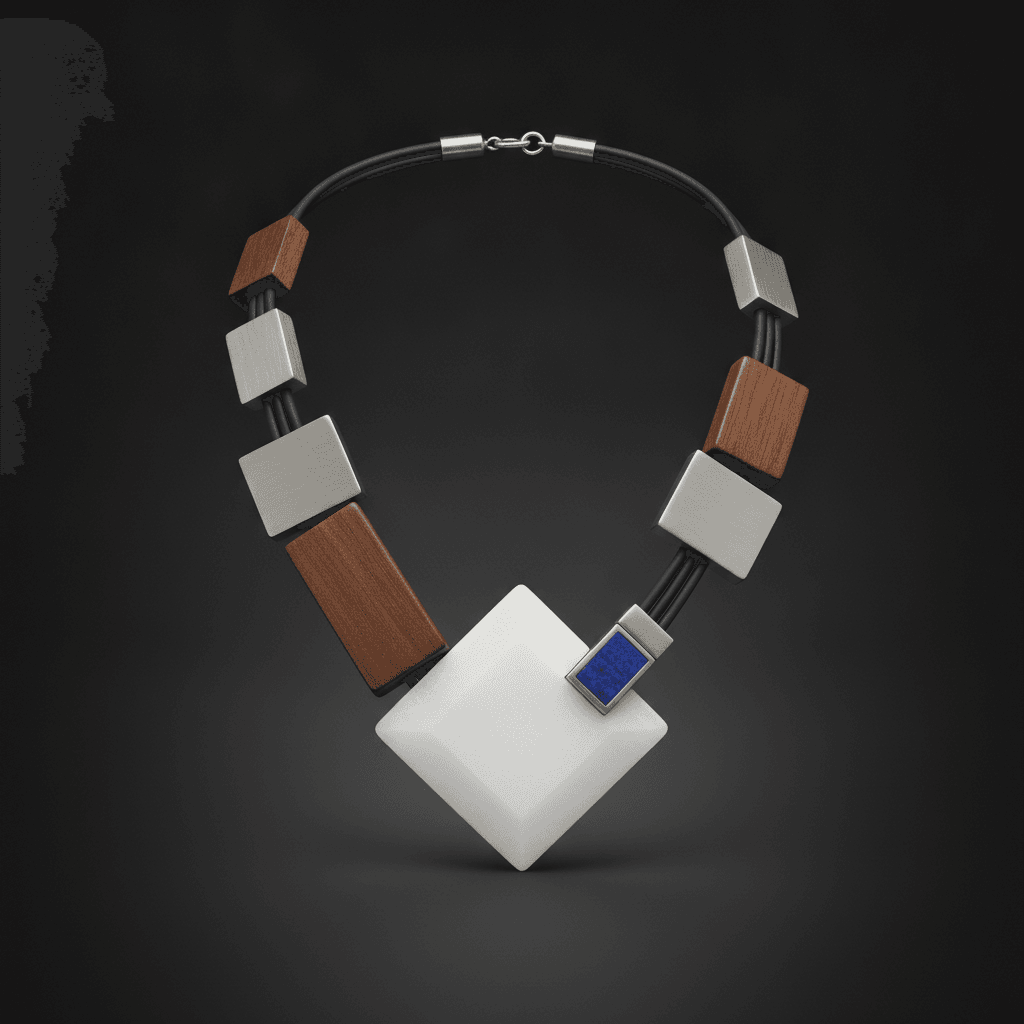
Contemporary jewelry is broader than a current fashion trend
Museums use contemporary jewelry to discuss work that challenges inherited ideas about adornment, material value, wearability, and the relationship between jewelry and fine art. The boundary is not a single year. The Victoria and Albert Museum describes a continuing redefinition of jewelry since the 1960s, while Cooper Hewitt traces radical conceptual and material developments from mid-twentieth-century pioneers to recent makers.
That history includes one-of-a-kind work, limited production, gallery jewelry, experimental design, and pieces made from both precious and non-precious materials. It does not mean that every recently manufactured object is part of an art-jewelry movement.
Related terms overlap
Studio jewelry usually emphasizes a maker or small workshop and the direct role of designing and making. Art jewelry emphasizes artistic ideas and context. Contemporary jewelry can include both, as well as design-led production. Modernist jewelry commonly refers to twentieth-century approaches shaped by abstraction, new materials, architecture, sculpture, and changing production.
These are interpretive categories, not regulated material grades. Use the term supported by the maker, gallery, museum, catalog, or scholarly source. If documentation is absent, describe the visual and construction evidence first.
What changed after World War II
The Met's Donna Schneier collection documents postwar makers experimenting with materials, techniques, and concepts. It identifies influences including abstraction, Conceptual art, Minimalism, Bauhaus, De Stijl, Pop art, performance, narrative, and figurative work. Cooper Hewitt's Jewelry of Ideas begins with mid-century American and European pioneers and follows later avant-garde developments.
This history helps explain why a contemporary necklace might use paper, resin, steel, textile, found objects, rubber, or a photograph alongside—or instead of—gold and gemstones. The choice may be conceptual, structural, sensory, political, or practical. Non-precious material is not automatically evidence of low artistic importance, and precious material is not automatically evidence of it.
The body is part of the design
Contemporary work may be understood only when worn. Scale, weight, balance, movement, sound, touch, and placement can be central. A brooch can alter a garment's silhouette; a necklace can frame or restrict space; an articulated piece can change with movement. Some works deliberately test the boundary between wearable object and sculpture.
Record how the fastening works and how the object is oriented. A front-only photograph may miss the design's most important engineering or conceptual decision.
How to examine an unidentified piece
Create a neutral record before assigning a movement or maker:
- Photograph front, reverse, edges, joins, fastener, and all marks.
- Record dimensions, weight, flexibility, moving components, and how it sits on the body.
- Separate confirmed materials from visual guesses.
- Note fabrication evidence such as soldering, casting, forging, weaving, molding, printing, electroforming, or digital manufacture.
- Document wear, repairs, replaced components, and packaging.
- Search signatures, gallery labels, exhibition history, maker archives, and museum collection records.
Unusual materials and asymmetry are clues, not a dating method. Historic jewelry has also used unconventional materials, and contemporary makers frequently quote older forms.
Maker attribution requires more than resemblance
Recognizable artists develop recurring vocabularies, but forms are copied, taught, and independently rediscovered. A similar silhouette found online does not prove authorship. Compare marks, dimensions, materials, technique, date, provenance, and documented variants. Ask whether the maker or their archive offers authentication and what evidence they require.
An institutional artist page, collection record, exhibition catalog, or archive can guide comparison by documenting materials, dimensions, dates, techniques, and provenance. Even a close visual match remains a lead to investigate rather than an attribution by itself.
Condition and care can be unconventional too
A contemporary object's intended surface may be rough, oxidized, temporary, degradable, or interactive. Cleaning it to conventional “jewelry shine” can erase artistic intent. Mixed materials may respond differently to water, solvents, heat, light, or pressure. Preserve labels and artist instructions, photograph condition, and consult a conservator or the maker before treatment.
Wearability also needs evaluation. Projecting forms, magnets, unusual clasps, thin wires, and heavy components require inspection. Museum classification as jewelry does not guarantee that an aging object remains safe for regular wear.
Value is not the sum of raw materials
Contemporary jewelry markets may value authorship, concept, exhibition history, rarity, craftsmanship, provenance, and condition more than melt or gem value. Other pieces remain primarily decorative or commercially produced. Define the valuation purpose and use comparables from the appropriate market rather than assuming a paper necklace is either worthless or more valuable than gold.
A useful conclusion
Contemporary jewelry is best identified through the combined evidence of maker, material, process, concept, body relationship, and documented context. Use movement labels as research hypotheses, preserve uncertainty, and let institutional records and maker documentation carry claims that appearance alone cannot.
Want more jewelry knowledge?
Download our app for quizzes, care guides, and AI identification