Minimalist Jewelry: How to Recognize Restraint in Form
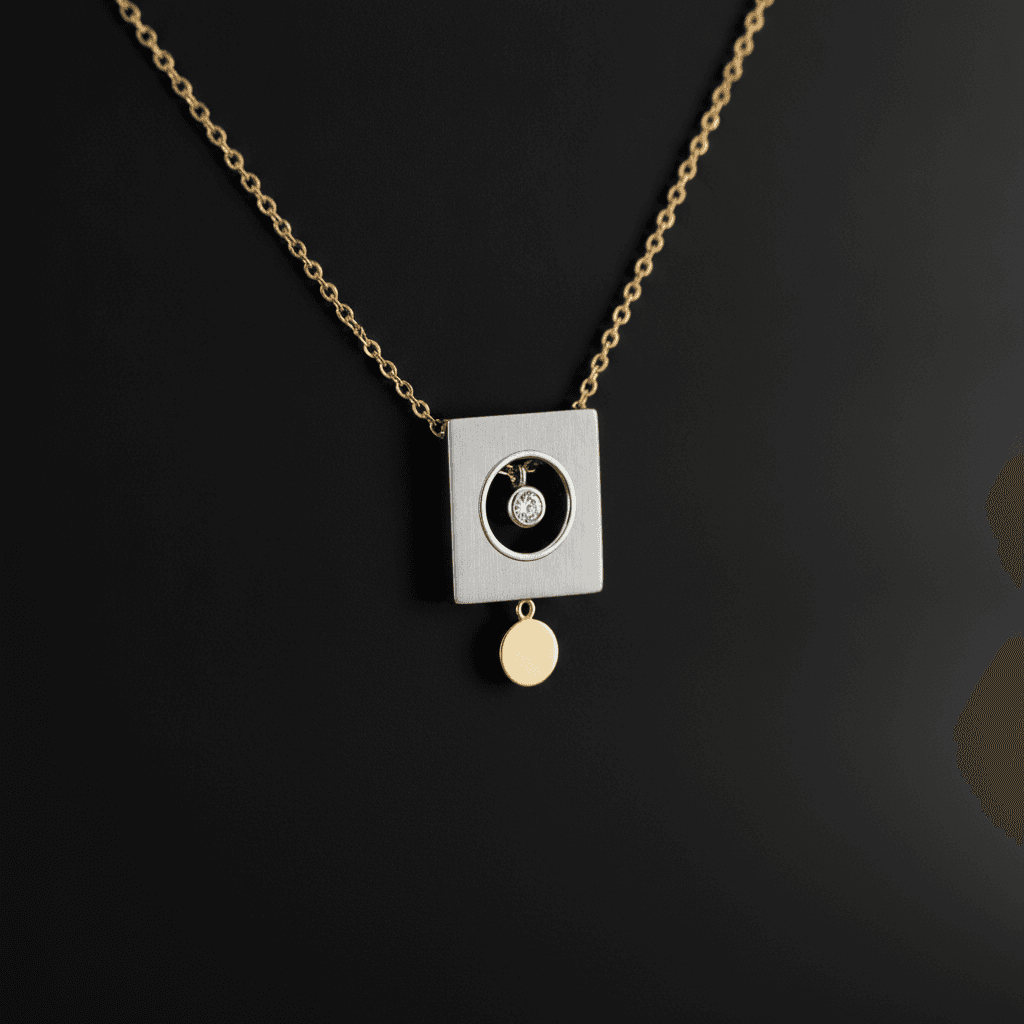
Minimalism is an approach, not a size specification
Minimalist jewelry reduces visual elements so that line, proportion, space, surface, or a small number of materials carries the design. It may be delicate, but it does not have to be tiny. A broad plain cuff, a single geometric brooch, or a spare steel structure can be minimalist even when it occupies substantial space on the body.
There is no authoritative rule that a minimalist chain must fall within a particular millimeter range or that a pendant must remain below a set diameter. Those measurements can describe an object, but they do not define the movement or prove quality.
Look for reduction and intention
Minimalist influence often appears through a limited vocabulary:
- one clear geometric or organic form;
- a restrained material or color palette;
- repeated units with little ornament;
- deliberate negative space;
- precise proportion and alignment;
- attention to edge, finish, balance, and fastening;
- a close relationship between object and body.
The absence of gemstones is not required. A single stone can be integral to a reduced composition. Nor does simplicity mean that a piece was easy to make. Clean joins, even surfaces, controlled tension, and a well-integrated clasp can demand considerable skill.
Historical and contemporary context
Minimalism influenced postwar and contemporary jewelry alongside abstraction, Conceptual art, Bauhaus, and De Stijl. The Metropolitan Museum of Art's Donna Schneier collection documents artists experimenting with materials, techniques, and concepts after World War II and specifically names Minimalism among the influences on the field. Cooper Hewitt's Jewelry of Ideas similarly traces radical material and conceptual developments from mid-century pioneers to recent makers.
Not every simple piece belongs to that art-historical context. Plain bands, wire earrings, undecorated chains, and geometric ornaments existed long before twentieth-century Minimalism. If the maker and date are unknown, say “minimalist in appearance” rather than assigning the object to a movement.
Minimalist, delicate, modernist, and contemporary are different labels
Delicate describes physical or visual fineness. Minimalist describes reduction. Modernist can refer to varied twentieth-century design approaches. Contemporary identifies a present or recent context, though museums and markets use the boundary differently. A delicate floral pendant may not be minimalist; a heavy geometric cuff may be.
Likewise, everyday jewelry describes use rather than style. A wearer may choose minimalist pieces for daily use, but exposed stones, thin chains, and projecting forms still need material- and construction-specific care.
How to document a minimalist piece
Because there are fewer decorative elements, small differences matter. Photograph the full object on a neutral background, then capture the profile, closure, joins, underside, marks, and how it sits on the body. Record exact dimensions, weight, flexibility, and orientation.
Describe what carries the design:
- Is the outline circular, rectilinear, asymmetrical, or biomorphic?
- Does negative space form part of the composition?
- Is the surface mirror-polished, matte, brushed, hammered, oxidized, or coated?
- Is the fastening hidden, emphasized, or integrated into the form?
- Are modules handmade, cast, stamped, machined, or digitally fabricated?
- Are materials confirmed by marks or testing, or only visually suspected?
A clean photograph can conceal scale, thickness, and construction. Side and back views are essential for attribution.
Materials do not settle quality or value
Minimalist jewelry can be made from precious metal, stainless steel, aluminum, plastic, paper, textile, found material, or combinations. Museum collections show that contemporary jewelers have deliberately challenged the idea that material cost determines artistic significance. Conversely, a plain gold item is not important merely because it is gold.
Do not assume plated jewelry is inferior for every purpose or that solid precious metal guarantees strong construction. Evaluate design, craftsmanship, condition, maker, provenance, material, and market separately. If metal content affects a purchase or sale, use documented marks and suitable testing.
Care follows material, not aesthetic
The word minimalist provides no cleaning instruction. A plain-looking object may contain a coating, adhesive, patina, spring mechanism, or mixed metals. A thin chain can stretch; a broad polished surface can scratch; a steel element may corrode; a matte finish can become patchy with aggressive polishing.
Follow the maker's guidance when available. Otherwise, inspect first, avoid abrasive cleaners, keep pieces separated, and seek professional advice for valuable or materially uncertain objects.
Questions that strengthen attribution
Look for a maker's mark or signature, original packaging, exhibition label, invoice, gallery record, catalog illustration, or family photograph. Compare the complete construction—not just the front silhouette—with documented museum objects. Remember that popular forms are widely copied and revived.
The practical definition
Minimalist jewelry gives a small number of formal decisions unusual weight. Describe those decisions precisely and keep claims about date, movement, maker, material, and value separate until evidence supports them. “Less” becomes informative only when the remaining line, space, surface, and construction are examined closely.
Want more jewelry knowledge?
Download our app for quizzes, care guides, and AI identification