Diamond Grading Reports: GIA, AGS Ideal, IGI, and What to Verify
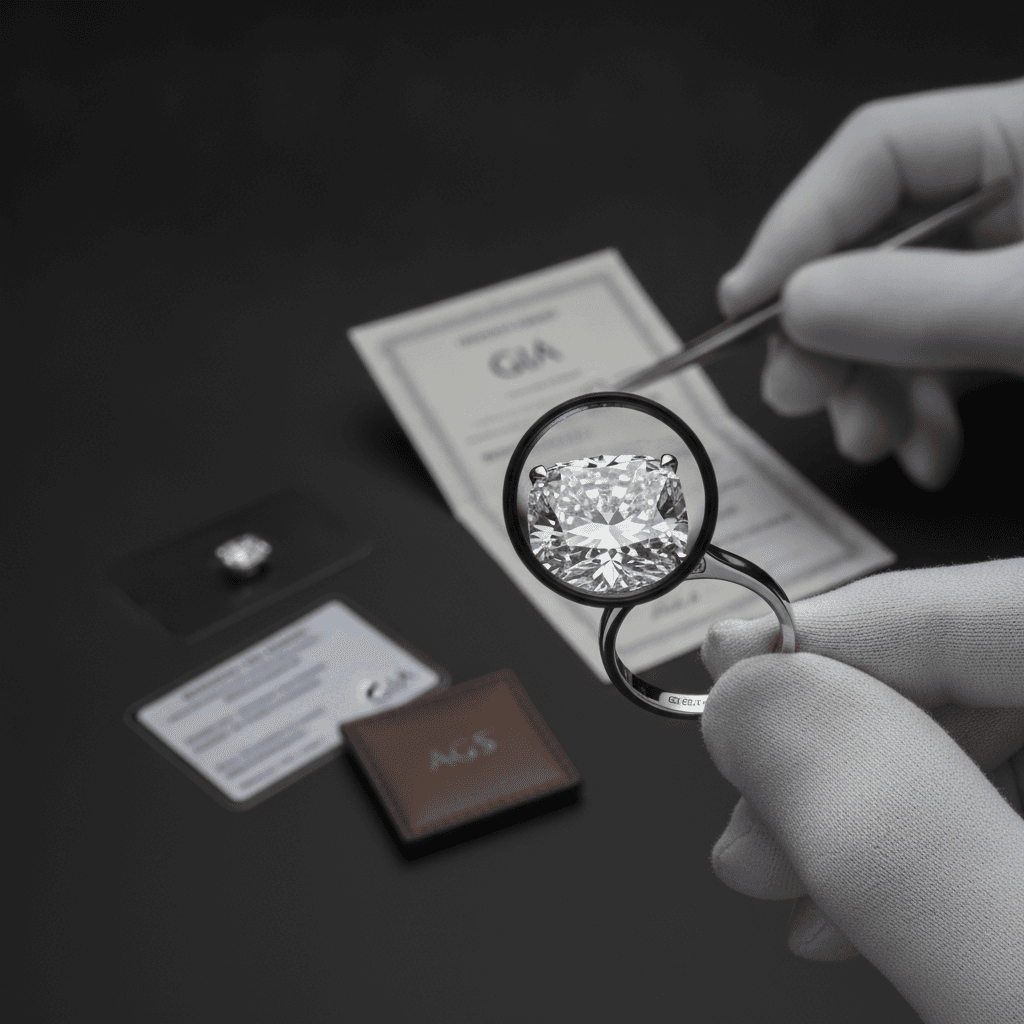
Call it a report, not a guarantee
Consumers often say “diamond certificate,” but major laboratories issue grading or identification reports. GIA states that its report is an expert statement about a gem's identity and quality characteristics and is not an appraisal of financial value. Its terms also explain that a report is not a guarantee or warranty. IGI similarly describes what is commonly called a certificate as a grading report.
That distinction matters. A report can provide structured evidence about a submitted stone. It does not establish legal ownership, provenance, the price you should pay, the amount you could resell for, or a guaranteed future result from another examination.
What a diamond grading report may contain
The fields depend on the laboratory and service. For an eligible loose diamond, a report may identify natural or laboratory-grown origin and record shape, measurements, carat weight, color, clarity, cut information, polish, symmetry, fluorescence, plotted characteristics, proportions, treatments, and inscriptions. Not every report includes every field, and mounted jewelry can limit observations.
Read the service name and eligibility, not just the laboratory logo. A diamond grading report, colored-stone identification report, jewelry report, dossier, and supplemental light-performance report answer different questions.
What changed with AGS Laboratories
The old assumption that shoppers choose between two currently operating laboratories called GIA and AGS is outdated. The American Gem Society says AGS Laboratories closed in 2022 after serving the industry for 27 years. The current AGS Ideal Report is available through GIA as a supplemental report for eligible diamonds. It focuses on light performance and complements a GIA grading report; it is not a replacement for the underlying 4Cs report.
An older AGS Laboratories report can still be part of a piece's documentation. Treat it as a historical report and evaluate the exact stone, report date, service, condition, and whether an updated examination is appropriate.
GIA and IGI reports
GIA offers several natural-diamond and jewelry services. Its Report Check lets a user compare a report number with archived information. IGI offers reports for natural diamonds, laboratory-grown diamonds, gemstones, and finished jewelry and provides online report verification. The existence of multiple legitimate report types is why broad claims that one logo automatically makes a stone better or worth a fixed percentage more are not responsible.
Laboratories can use different procedures, eligibility rules, nomenclature, and report formats. Even within one laboratory, services evolve. Compare the actual report fields and limitations required for your decision rather than relying on a seller's ranking of lab names.
Verify the report, then match it to the stone
First, use the issuing laboratory's official verification service. Enter the report number yourself instead of following an unfamiliar link supplied by a seller. Compare the archived shape, measurements, weight, grades, comments, and report date with the copy you received.
Second, determine whether the physical stone is the one described. A valid report number can be copied into a fake listing or paired with a different stone. A laser inscription may help, but it must be read with suitable magnification and compared carefully. Inscriptions can be absent, altered, or imitated, and not every report includes one. For a consequential purchase, ask an independent professional to compare the stone, measurements, characteristics, and inscription with the verified report.
Third, confirm that the report answers your question. A report on a loose diamond does not describe the mounting. A report that records natural origin does not prove where the seller acquired the stone. A 4Cs report does not provide insurance replacement or resale value.
Questions to ask before buying
- What is the exact laboratory and report service?
- Can I verify the report number on the laboratory's own website?
- Does the report describe this loose stone or a finished piece?
- Does it state natural or laboratory-grown origin and relevant treatments?
- Who will compare the item with the report before the return window closes?
- Has the stone been damaged, recut, repaired, or remounted since the report date?
- Is a separate appraisal required for my insurance or legal purpose?
The responsible takeaway
A grading report is valuable evidence when it is authentic, current enough for the decision, and matched to the physical stone. It should make the transaction more specific, not more magical. Verify at the source, read the limitations, and keep grading separate from monetary appraisal.
Want more jewelry knowledge?
Download our app for quizzes, care guides, and AI identification