Gold Plated vs Gold Filled vs Karat Gold: What the Terms Mean
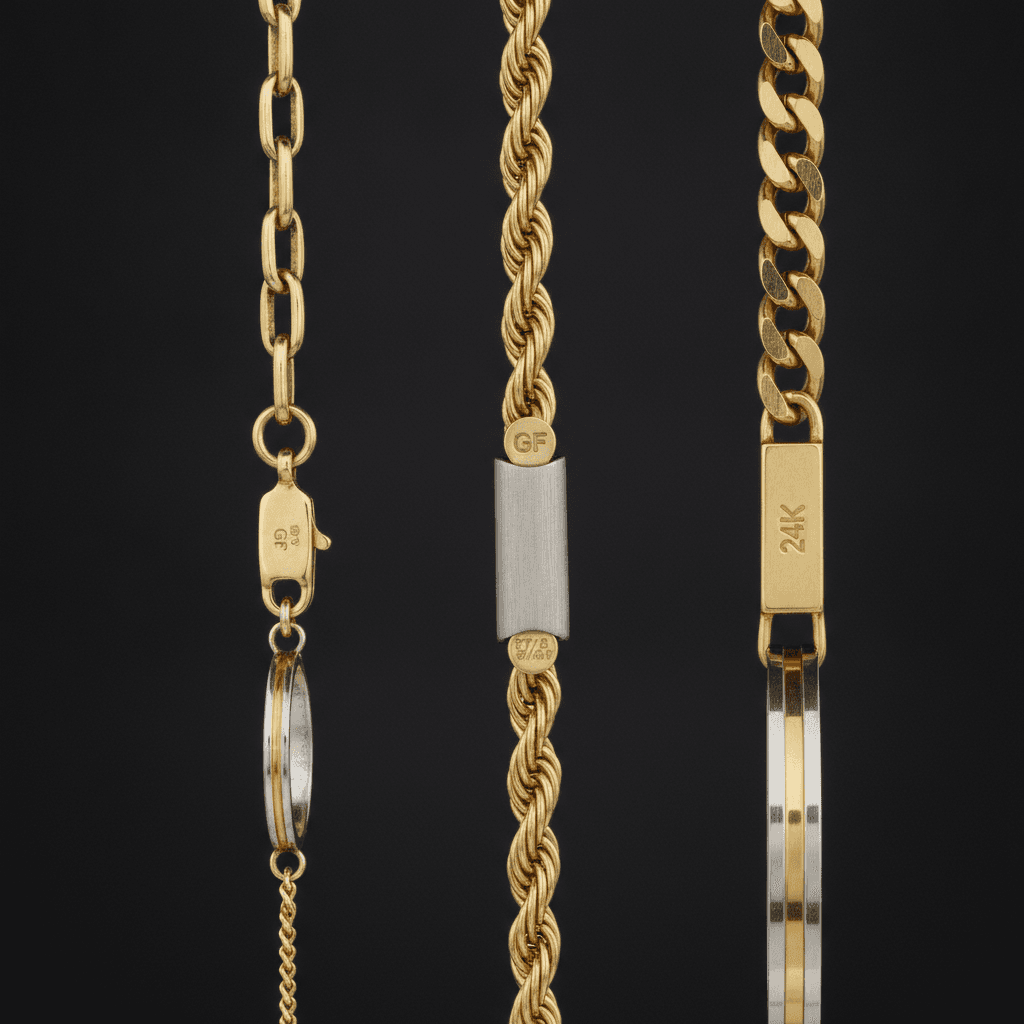
The surface color does not reveal the construction
Two pieces can look similarly gold-colored while containing very different amounts and arrangements of gold. The useful question is not whether the surface includes “real gold,” but whether the item is a karat-gold alloy throughout the relevant component, a hollow karat-gold construction, a mechanically bonded layer, an electroplated coating, vermeil over sterling silver, or another product.
These categories should not be ranked with fixed lifespans. Wear depends on coating thickness, process, base material, friction, skin chemistry, cosmetics, cleaning, repair, and how often the item is used. A responsible description explains construction and known specifications rather than promising that every plated piece lasts a certain number of months or every filled piece lasts decades.
Karat gold and the word solid
Karat describes gold proportion on a 24-part scale. An 18K alloy contains 18 parts gold out of 24, while 14K contains 14 parts gold. The remaining alloying metals influence color and working properties.
FTC consumer guidance uses “solid gold” to mean that an item is not hollow; it still needs a karat mark because it is normally an alloy rather than pure gold. This is why “solid” should not be interpreted as 24K or as a statement that every attached component has identical composition. Clasps, springs, solder, and findings may need separate consideration.
Gold plated and electroplated
Plating places a surface layer of gold or gold alloy over another material. FTC guidance distinguishes several processes and minimum descriptions, including gold electroplate, gold flashed, and gold washed. Eventually a coating can wear, particularly at high-friction edges. The exact behavior depends on the specification and use.
The mark GP commonly suggests gold plated, but an abbreviation should be read as part of the full mark and sales description. Photograph adjacent karat numbers, thickness terms, maker identity, and the base-metal disclosure. A gold-colored surface is not a basis for calculating solid-gold scrap value.
Vermeil is a gold-plated product with a sterling-silver base under the U.S. consumer description. UK guidance for gold-plated silver illustrates why wording and hallmark context must make the plated nature clear. Rules and minimum specifications vary by jurisdiction, so do not assume one country's label applies everywhere.
Gold filled, overlay, and rolled gold plate
FTC guidance describes gold filled, gold overlay, and rolled gold plate as products with a mechanically applied layer of at least 10-karat gold over base metal. A full quality mark may state the karat of the layer, the term or abbreviation, and a weight fraction when required. Record the entire expression rather than interpreting GF alone.
Gold filled is not solid karat gold throughout, and it is not the same process as ordinary electroplating. It can contain a more substantial mechanically bonded layer, but wear and remaining condition still need to be assessed on the individual piece. A mark does not tell you how much layer remains after years of use or polishing.
Marks and tests have limitations
Look at clasps, edges, ring interiors, chain links, solder joints, and other high-wear areas for color changes or exposed substrate. Those observations can suggest a layered construction but cannot quantify it. A counterfeit or incomplete mark is possible.
Professional XRF analysis can provide useful elemental information, but GIA has documented gold-plated gold items in which surface plating produced an inaccurately high reading for the underlying alloy. A trained examiner may need microscopy, multiple test points, and other methods. Do not scratch, file, or use acid on important jewelry at home merely to expose a core.
Choosing among constructions
For frequent wear, ask about repairability, coating maintenance, base-metal sensitivity, and whether the seller offers re-plating. For an heirloom or resizing project, construction and thickness can matter more than the marketing category. For resale, use verified weight and construction rather than retail price or appearance. For sensitive skin, obtain precise material information and remember that posts, backs, solder, and clasps may differ.
A buyer's checklist
- Get the full material description in writing.
- Photograph every quality, maker, and process mark.
- Ask for karat, layer process, base material, and any thickness or weight fraction.
- Check whether separate components have different marks.
- Understand maintenance and return terms.
- Use qualified testing when value or repair depends on construction.
The responsible takeaway
Gold plated, gold filled, and karat gold are legitimate but materially different products. The best choice depends on use, budget, repair expectations, and evidence—not a universal lifespan or prestige ranking.
Want more jewelry knowledge?
Download our app for quizzes, care guides, and AI identification