Platinum vs White Gold: Composition, Wear, Maintenance, and Marks
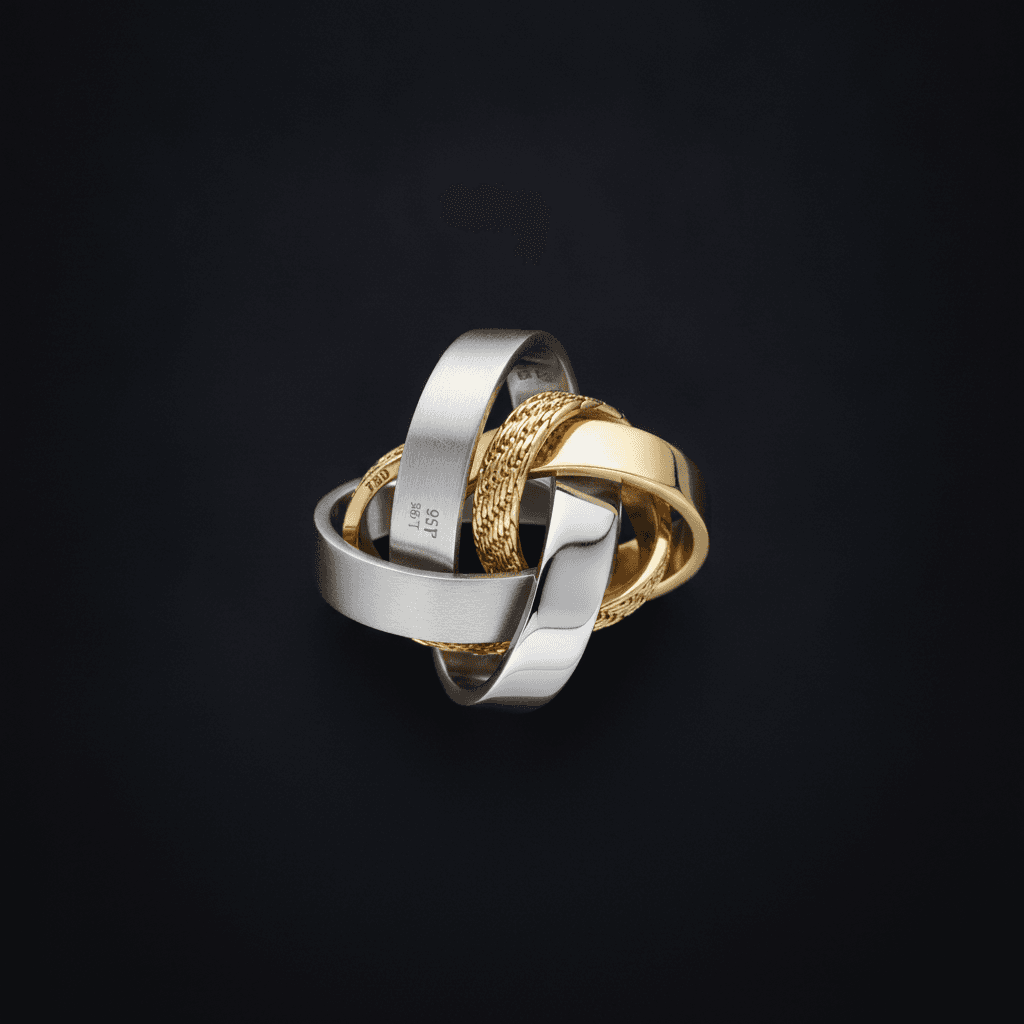
Similar color, different material systems
Platinum and white gold can both provide a pale setting for jewelry, but they are not versions of the same metal. Platinum jewelry is a platinum alloy whose quality mark states its platinum proportion. White gold is a karat-gold alloy in which gold is combined with whitening metals and is often finished with rhodium plating.
The correct choice depends on the actual alloy, construction, finish, ring design, wearer, service options, and current budget. Avoid rules that one is always more durable, always more expensive, or always allergy-safe.
Fineness and marks
FTC consumer guidance says an item described simply as platinum in the United States should be at least 95 percent pure platinum; lower-platinum formulations require qualified descriptions showing their composition. Marks can include Platinum, Plat, Pt, or a fineness expression, but the exact mark must be read under its market's rules.
White gold follows the karat system. An 18K white-gold alloy contains 75 percent gold; 14K contains approximately 58.3 percent. The non-gold portion can include nickel, palladium, silver, copper, zinc, or other constituents depending on the recipe.
A quality mark is evidence, not a complete authentication. Record the maker or responsible-party mark, jurisdiction, and separate components. A bare 950 number needs metal context because 950 can appear in more than one precious-metal system.
Color and rhodium plating
Platinum is naturally gray-white. White-gold alloy can retain a warmer or gray tone, so many white-gold pieces receive a thin rhodium surface for a brighter appearance. GIA explains that this coating can wear and may require re-plating if the owner wants to maintain the bright finish.
There is no universal re-plating schedule. Friction, ring geometry, coating thickness, skin chemistry, cleaning, and wear determine when the underlying tone becomes visible. Some owners prefer the changing appearance; others maintain the coating. Confirm whether a platinum ring also has a decorative coating, because finishes vary.
Weight and feel
Platinum is dense, so comparable designs can feel heavier than gold alloy. The exact difference depends on dimensions and whether the piece is hollow. Try on rings of similar width and profile rather than using a percentage from a generic comparison.
Weight can feel substantial to one wearer and uncomfortable to another. It also affects material use and manufacturing cost, but weight alone does not prove metal identity.
Scratches, wear, and patina
Both metals can scratch. Platinum often develops a soft patina as its surface changes with wear. White gold's rhodium coating can scratch and wear, revealing the alloy tone beneath. Statements that platinum “never loses metal” are too absolute: polishing and long use can remove material from any jewelry, and the behavior of scratches depends on alloy and finish.
Prong security is a design and maintenance issue, not a guarantee supplied by the metal name. Have frequently worn rings inspected for loose stones, worn prongs, thinning, and damaged settings according to a jeweler's advice.
Skin sensitivity
Some white-gold alloys contain nickel, a common contact allergen. Palladium-based white-gold recipes exist, and rhodium can temporarily separate skin from the alloy until wear exposes it. Platinum jewelry is often high purity, but no material label guarantees that every person will tolerate every alloy, solder, coating, or component.
Ask for the exact alloy and skin-contact materials. If a rash develops or recurs, stop wearing the piece and consult a healthcare professional rather than attempting to diagnose the cause from color or karat.
Sizing, repair, and long-term service
Both platinum and white-gold rings can often be resized, but design may limit the work. Eternity stones, complex pavé, inlays, mixed metals, engraving, and large size changes add difficulty. Platinum requires appropriate tools, solder or laser work, and compatible alloy knowledge. White gold may need finish restoration and rhodium re-plating after service.
Ask who will service the exact design, what future sizing range is realistic, and how refinishing affects engraving, patina, and plating.
Price should be checked now, not memorized
Do not use a fixed claim that platinum costs a set percentage more. Metal markets move, gold and platinum prices differ by date, and finished-jewelry cost also includes density, labor, alloy, setting, design, brand, and margin. Compare written quotes for the same design and service package at the time you buy.
A practical comparison
- Verify the full fineness and maker marks.
- Ask for white-gold alloy and rhodium details.
- Compare actual ring weight and comfort.
- Discuss scratch appearance, patina, and refinishing.
- Confirm sizing and repair options.
- Consider documented skin sensitivity.
- Compare current total cost and maintenance, not a stale percentage.
The responsible takeaway
Platinum offers a naturally white, dense precious-metal alloy; white gold offers a karat-gold alloy commonly brightened by rhodium. Neither is universally better. The right answer is the documented material and design that fits the wearer, service plan, and current budget.
Want more jewelry knowledge?
Download our app for quizzes, care guides, and AI identification