Professional Jewelry Cleaning vs. At-Home Care
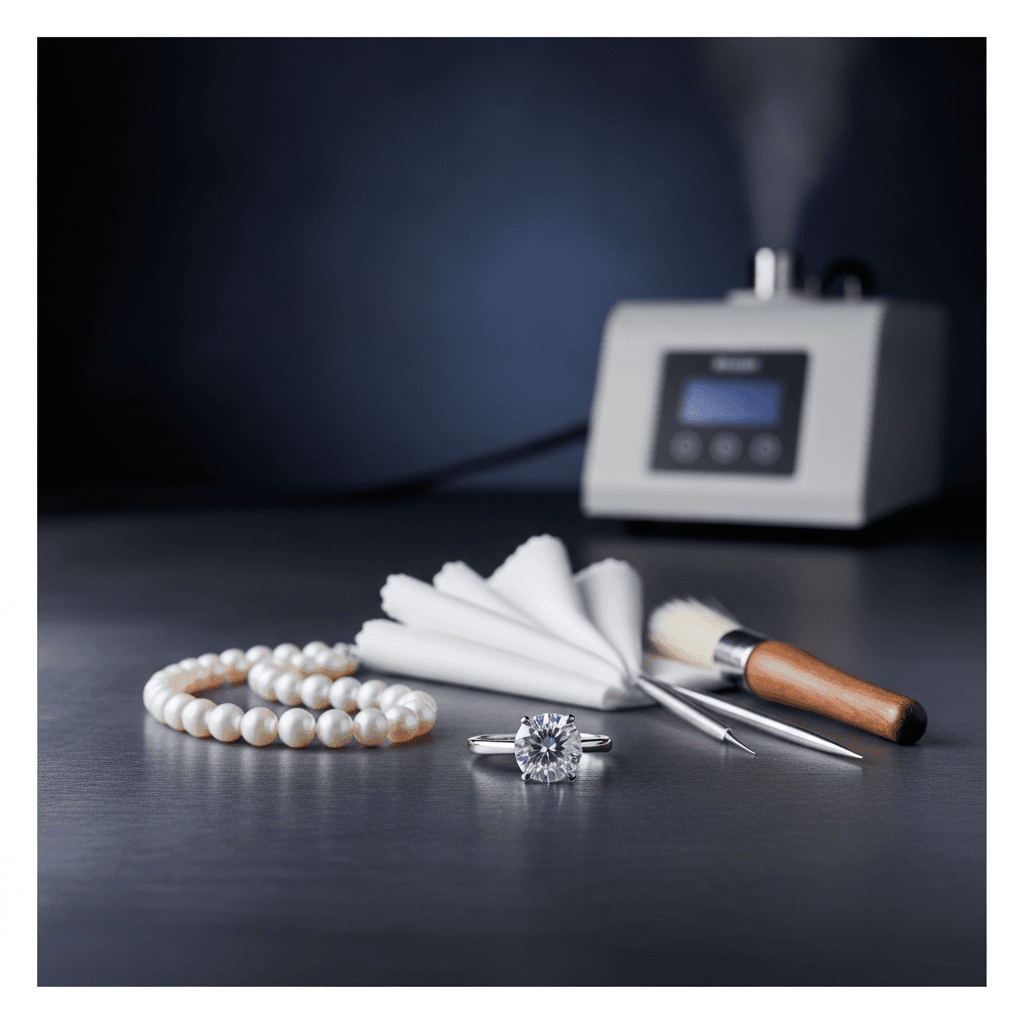
The difference is inspection and material-specific judgment
At-home care is useful for light maintenance only when you know what the jewelry contains and it is in sound condition. Professional care adds close inspection, repair judgment, and access to cleaning methods selected for a particular gem, treatment, metal, and construction. An ultrasonic or steam machine is not automatically better than soap and water; on the wrong piece it can loosen, chip, discolor, or otherwise harm materials.
The safest choice is based on the item, not a universal calendar. Frequently worn rings may need more inspection than an occasional pendant, while an antique, glued, enamelled, pearl, opal, or fracture-filled piece may need conservative handling from the start.
What gentle home care can do
Home care can remove fingerprints, skin oils, and ordinary surface residue from many sound pieces. Before adding water, examine the piece under bright light. Stop if a stone moves, a prong catches, a clasp does not close, a chain link is opening, foil or adhesive is visible, or the surface is flaking. Do not soak an item simply because the metal looks like gold or silver; plated, hollow, assembled, and composite pieces may react differently.
GIA advises that many colored gems can be cleaned with warm water, mild soap, and a soft brush, but it also stresses that treatments and gem-specific durability change what is safe. Use a small bowl rather than working over an open drain. Brush gently without forcing bristles under prongs, rinse in a separate container, and dry with a clean, soft, lint-free cloth. If the identity or treatment is unknown, a soft dry or slightly damp cloth is the more conservative starting point.
Do not use toothpaste, abrasive powders, chlorine bleach, strong acids or alkalis, solvent mixtures, or improvised metal dips on an unidentified piece. Avoid prolonged soaking and dramatic temperature changes. A household recipe that is suitable for plain solid metal may be unsuitable for its solder, coating, patina, stones, stringing, or adhesive.
Why professional equipment requires expertise
Ultrasonic cleaners use vibration in liquid to dislodge contamination from small spaces. GIA warns against using them on organic gem materials, stones with surface-reaching fractures filled with oil, resin, or glass-like substances, coated gems, and gems sensitive to heat or temperature change. Vibration can also loosen stones or chip gems whose girdles touch.
Steam introduces heat and pressure. It can be inappropriate for heat-sensitive stones, treated gems, old assemblies, and pieces with uncertain construction. A responsible professional does not place every item into the same machine. They first identify likely materials, inspect the mounting, ask about treatments and repairs, and select a compatible process. Sometimes the professional recommendation should be minimal cleaning or referral to a conservator.
What an inspection can catch
Cleaning makes sense only if the jewelry remains mechanically secure. A trained jeweler can look for thinning prongs, cracked solder joints, worn hinges, damaged channels, stretched stringing, loose stones, and failing clasps. Inspection does not authenticate every gem or produce an appraisal, but it can identify repair needs before ordinary wear makes them worse.
Ask what the cleaner observed, what process they propose, whether stones will be removed, and what risks remain. For antique or historically important jewelry, ask whether the shop has relevant experience or whether an objects conservator is more appropriate. Deliberate patina, oxidized finishes, foil-backed stones, enamel, and original tool marks can be part of an object's history; a bright finish is not always the correct outcome.
When to choose each route
At-home care may be reasonable when the materials and treatments are known, the construction is sound, and only light residue is present. Choose professional assessment when the piece is valuable or irreplaceable, a stone or setting seems loose, the item is antique, a treatment is unknown, residue is trapped beneath the setting, or the maker's care instructions call for it.
There is no evidence-based rule that every piece must be cleaned weekly or professionally on exactly the same schedule. GIA offers a six-month inspection suggestion as general consumer guidance, but wear, construction, and manufacturer or insurer requirements should determine the actual interval.
Questions to ask before professional cleaning
- What materials and treatments do you believe are present?
- Will you inspect the setting before and after cleaning?
- Which method will you use, and why is it appropriate here?
- Could the process alter a coating, patina, adhesive, foil, enamel, or string?
- Will you document any repair recommendation separately?
Good care is conservative and reversible where possible. Clean only as much as needed, preserve identifying details, and treat inspection as more important than maximum sparkle.
Want more jewelry knowledge?
Download our app for quizzes, care guides, and AI identification