How to Store Jewelry Without Scratches, Tangles, or Tarnish
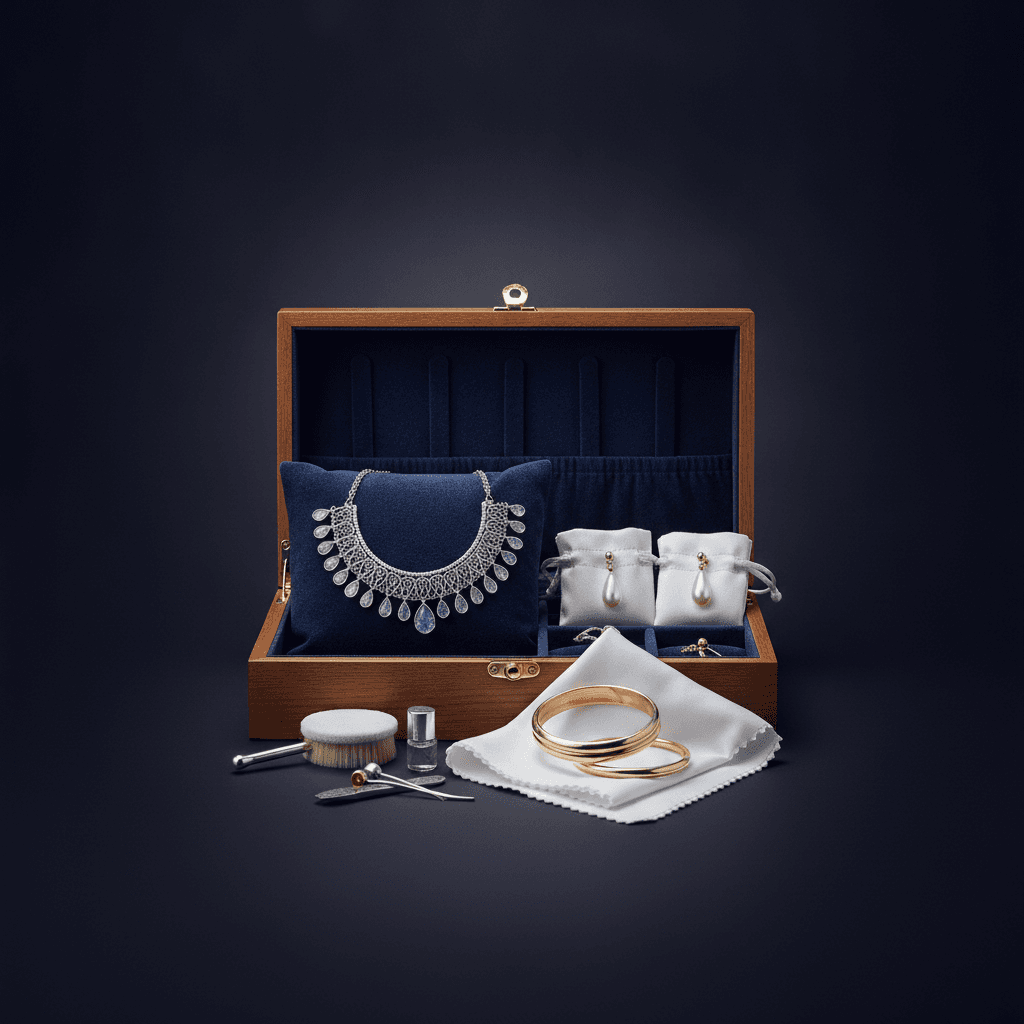
Separate first, then control the environment
The most useful storage rule is simple: prevent pieces from rubbing, snagging, bending, or reacting with unsuitable materials. A diamond can scratch many other gems and polished metals, while chains can knot around prongs and clasps. Store each vulnerable piece in its own padded compartment, inert pouch, or supported box rather than dropping a collection into one tray.
Storage should also reflect what the object is made from. Silver needs protection from sulfur-containing gases. Pearls and some opals should not be kept in excessively hot or dry conditions. Plated, painted, enamelled, glued, strung, and antique pieces may need more conservative conditions than plain solid metal.
Start with a condition check
Before storage, look for a loose stone, open jump ring, bent prong, frayed string, active corrosion, dampness, or residue. Do not clean aggressively just because an item is going into a box. If the materials are unknown, remove loose dust with a soft brush or cloth and seek advice before using liquids or polish. Allow any safely cleaned piece to dry fully before enclosure.
Photograph the piece and its marks if it is valuable, inherited, or difficult to identify. Note existing scratches, missing stones, repairs, and packaging. This creates a condition reference; it is not an authentication or appraisal.
Choose enclosures carefully
Use clean, smooth materials that do not shed fibers, transfer dye, or press against delicate surfaces. Padded compartments work well when pieces cannot touch. Support long chains in a relaxed position and close their clasps so they do not thread through other jewelry. Do not hang a heavy pendant from a fragile chain for long-term storage; support the weight.
The Canadian Conservation Institute recommends closed or sealed containers for many metal objects because pollutants can be difficult to control. For museum silver, it describes polyethylene bags, acid-free unbuffered tissue, desiccated silica gel, activated charcoal, and tarnish-inhibiting cloth as possible preventive tools. Household products vary, so use archival or jewelry-storage materials with known composition rather than any plastic, tissue, foam, rubber band, or fabric at hand.
Avoid rubber, wool, newspaper, ordinary tissue, adhesive tape, and unknown foams around silver. Some materials release sulfur or other compounds that speed corrosion. Do not place loose silica-gel packets from product packaging into valuable jewelry storage without knowing their condition or preventing direct contact. Desiccants require management; more dryness is not always better for mixed-material jewelry.
Silver, gold, and plated pieces
Silver tarnish is a surface reaction with sulfur-containing gases. Slowing exposure is usually safer than repeatedly polishing away tarnish and a small amount of underlying metal. Store clean silver separately in a suitable sealed enclosure or tarnish-inhibiting cloth and inspect it periodically.
Pure gold is corrosion resistant, but most jewelry is alloyed, and gold-looking pieces may be plated over another metal. Store gold away from harder stones and rough surfaces. Do not assume that an anti-tarnish treatment suitable for silver is automatically appropriate for plated, patinated, or composite jewelry.
Pearls, opals, and organic materials
GIA notes that excessive heat and dry conditions can harm pearls and opals. Pearls are also easily scratched. Store pearl jewelry flat or fully supported in a soft case, away from harder pieces, and avoid compressing the strand. Do not seal a damp pearl strand. Let stringing dry completely after any appropriate cleaning.
Avoid prescribing a single humidity percentage for a household collection without monitoring and material knowledge. A stable living environment away from heaters, direct sun, bathrooms, attics, and damp basements is usually a more practical goal. Historically important or visibly deteriorating items merit advice from a conservator.
A useful organization system
Group by risk rather than appearance:
- hard stones isolated from softer gems, enamel, and polished metal;
- necklaces fastened and supported without tension;
- earrings paired without posts scratching neighboring pieces;
- silver in appropriate tarnish-reducing enclosures;
- pearls and opals away from heat and extreme dryness;
- antique and composite pieces in labeled individual boxes;
- frequently worn items in a secure, consistent place rather than an open dish near water.
Add a brief label with the known material, date, provenance, and any care restriction. Keep receipts and reports separately from the jewelry so both are not lost together.
Inspect, do not endlessly polish
Check stored jewelry periodically for moisture, corrosion, failing adhesives, pests in organic packaging, loose components, and enclosure deterioration. Change tarnish-control materials according to their manufacturer instructions. If the surface changes unexpectedly, isolate the piece and get qualified advice rather than trying multiple cleaners.
Good storage does not promise zero tarnish or damage. It reduces contact, pollutants, mechanical stress, and environmental extremes while preserving the piece and the evidence needed to understand it later.
Want more jewelry knowledge?
Download our app for quizzes, care guides, and AI identification