What Is Rose Gold? Karat, Copper, Color, and Hallmark Clues
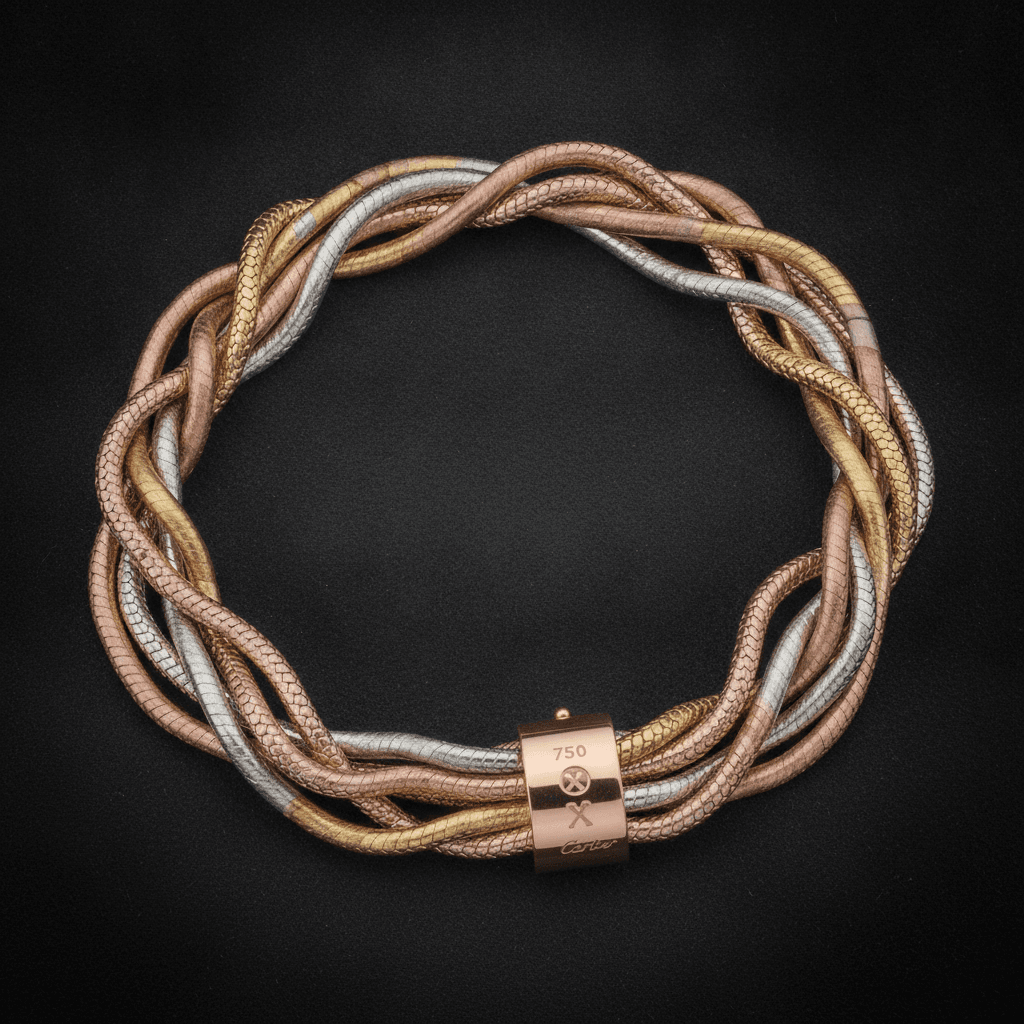
Rose gold is a family of gold alloys
Rose gold is not a separate elemental metal. It is gold alloyed mainly with copper and sometimes silver or other metals to produce a warm pink, peach, or red tone. GIA notes that the amount of copper influences the strength of the pink color and that recipes vary.
That variation is important. There is no single universal formula such as 75 percent gold, one exact copper percentage, and one exact silver percentage for every rose-gold item. A piece can be 9K, 10K, 14K, 18K, 22K, or another recognized fineness depending on the jurisdiction and product. Within the non-gold portion, manufacturers can use different recipes for color and working properties.
Karat describes gold proportion, not color
Karat divides the alloy into 24 parts. An 18K rose-gold alloy contains 18 parts gold out of 24, which is 75 percent. A 14K alloy contains 14 parts gold out of 24, approximately 58.3 percent. The remaining portion is the alloying mixture.
Parts-per-thousand marks may express the same proportions differently: 750 is associated with 18-karat gold and 585 with 14-karat gold. The number does not identify the exact copper-and-silver recipe, the shade, the maker, or whether the stamp is genuine.
Do not estimate karat from how red or pale the piece looks. Lighting, camera white balance, polishing, surface coatings, wear, and nearby metals can change perceived color. A higher copper share can deepen the tone, but visual color is not a composition test.
Is rose gold solid gold?
The phrase needs clarification. FTC consumer guidance uses “solid gold” to mean that a karat-gold item is not hollow. It does not mean pure 24K, and it does not describe a pink coating over another material.
A rose-colored object can be a karat-gold alloy throughout, hollow karat gold, rose-gold plated, gold filled with a rose-colored layer, or a base-metal alloy with no meaningful gold content. Get the construction in writing and examine the complete mark. Separate components can differ: a clasp, spring, post, solder joint, or replacement part may not match the body.
Why copper affects wear and skin response
Copper contributes color and can affect hardness and working behavior, but performance depends on the entire recipe and manufacture. Avoid absolute claims that every lower-karat rose gold is harder or every 18K piece is better for daily wear. Design, thickness, heat treatment, solder, setting, and maintenance matter.
Copper-containing alloys can also interact with moisture, skin chemistry, or cosmetics and may leave temporary discoloration. That mark does not prove an allergy or that the item is fake. If a rash develops or returns, stop wearing the piece and seek medical advice. A photo cannot determine which alloy constituent caused it.
Does rose gold tarnish or fade?
Gold itself is resistant to ordinary tarnish, but alloying metals and surface finishes can change appearance. A karat-gold alloy may develop patina, surface oxidation, scratches, or residue. A plated rose finish can wear through and reveal a different material beneath. Cleaning and polishing can also change texture and color.
Follow the maker's care guidance and consider stones, treatments, enamel, adhesives, and plating before using a cleaner. Do not polish an inherited or marked piece aggressively before documenting it.
History without a marketing myth
Pink and red gold alloys have a documented association with nineteenth-century Russian jewelry and later design periods, including renewed use in twentieth-century and contemporary jewelry. GIA notes the historical “Russian gold” name and Fabergé's use. That history does not date an individual piece. Modern makers regularly produce rose gold, and an old-looking design may be a revival.
Use provenance, maker archives, construction, marks, and condition together if age matters. Color alone cannot attribute a piece to Russia, Fabergé, Cartier, or any period.
How to identify rose gold responsibly
- Photograph the whole item and every mark before cleaning.
- Record karat or fineness, maker identity, and any plating or filled terms.
- Check the marking rules of the likely jurisdiction.
- Inspect high-wear areas and separate components for color differences.
- Treat a stamp as evidence, not proof.
- Use qualified testing when composition affects a purchase, repair, or sale.
Professional XRF and other methods can provide useful information, but surface plating, shape, and mixed construction can complicate results. Ask what was tested and what uncertainty remains.
The responsible takeaway
Rose gold is best understood as a color family within karat-gold alloys. Karat tells you the claimed gold proportion; it does not reveal the full recipe, authenticity, age, or value. Read the complete description and verify consequential claims with appropriate evidence.
Want more jewelry knowledge?
Download our app for quizzes, care guides, and AI identification