You Found a 925 Stamp: How to Verify the Jewelry Next
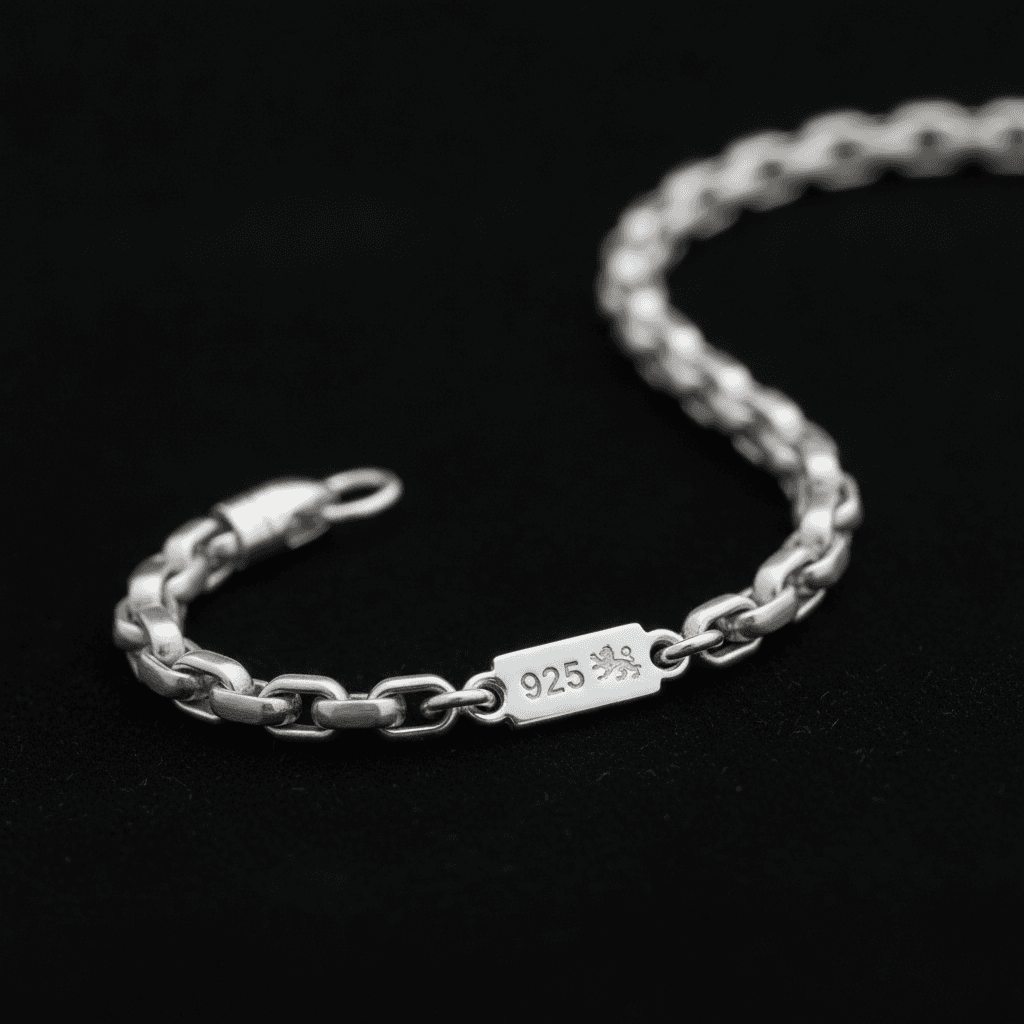
A 925 stamp is a claim that the marked silver alloy is 925 parts silver per thousand. It is evidence, but it is not self-authenticating and it does not describe every component automatically. If you first need the definition and common limits of the number, see the focused 925 hallmark guide. This article starts at the next question: how do you verify the object in front of you?
Work from least invasive evidence to more specialized testing. The aim is to connect the stamp to the correct marking system, responsible business, construction, and metal, while preserving the jewelry.
Record the stamp before interpreting it
Photograph the whole item, then the mark in its physical location. Take one image that shows where the stamp sits and a close view under angled light. Record every character, border shape, symbol, and separate mark without “correcting” faint letters into what you expect to see.
Location can matter. A clasp, jump ring, earring post, pendant bail, chain tag, and main body may be separate components made or replaced at different times. A 925 mark on a clasp does not automatically make every part of a necklace sterling. Photograph each component and note visible color differences, joins, wear points, and repairs.
Do not scrape, file, or polish the mark to make it clearer. That can remove evidence and damage plating, patina, or a collector surface. Dirt can be removed only with a method suitable for all materials in the piece.
Identify which marking system applies
The same number can appear in different legal and commercial contexts. In U.S. consumer guidance, 925 is a silver quality mark, and the FTC tells buyers to look for the name or U.S. registered trademark of the company or person standing behind it. That framework differs from a British statutory hallmark.
Current UK guidance describes a complete compulsory hallmark as a sponsor’s or maker’s mark, a metal-and-fineness mark, and an assay-office mark. Optional elements and weight exemptions also exist. A lone 925 on a small imported item should not be interpreted as a complete UK hallmark, and a genuine U.S. quality mark should not be rejected because it lacks a British assay-office symbol.
Use provenance, purchase country, mark style, and official jurisdiction-specific references to select the system. Do not use one worldwide symbol chart as if marking law were universal.
Check whether the claim fits the construction
Inspect edges, high points, backs, drill holes, solder joins, and areas near clasps. A different-colored layer beneath surface wear can suggest plating, but dirt, solder, fire scale, and reflections can also change color. Record the observation without declaring the metal from one spot.
Look for words or abbreviations that qualify the silver description, such as a plating term, as well as separate marks on findings. Hollow construction is not the same as plating. A hollow sterling object can still meet its fineness claim; “solid” often addresses construction rather than purity. Composite pieces may include steel springs, base-metal pins, solder, adhesives, enamel, stones, or non-silver findings.
A magnet can reveal a strongly magnetic component, but it cannot confirm sterling silver. Many non-silver metals are also nonmagnetic, while a genuine piece may contain a magnetic spring. Weight and “ice tests” are similarly weak when construction, stones, voids, and dimensions are unknown.
Verify the responsible mark and the paper trail
Search an accompanying maker, sponsor, or responsibility mark in the correct official register when one exists. Match exact letter shapes and enclosing outlines, not merely a similar name. A sponsor’s mark identifies the party that submitted an article for hallmarking; it does not necessarily identify the craftsperson who made it.
Compare the object with the invoice, listing, packaging, repair record, and any assay document. The description should state whether the jewelry is sterling silver, silver plated, vermeil, mixed metal, or another construction. Keep screenshots and receipts because online listings can change.
For a recent purchase, ask the seller to explain in writing which part is claimed as 925 silver and who stands behind the mark. Vague answers such as “stamped, so guaranteed” add no independent evidence.
Choose testing that matches the stakes
Testing should answer a defined question with acceptable risk. Start with examination by someone who understands jewelry construction and hallmark systems. A professional may use calibrated electronic methods, X-ray fluorescence, density in suitable circumstances, or a controlled chemical test. Each has limits.
X-ray fluorescence generally analyzes the near-surface composition, so plating and surface enrichment can affect interpretation. Acid testing is destructive and its result depends on sampling, method, and experience. Density calculations can be misleading for hollow, stone-set, dirty, or mixed-material jewelry. No test should be presented as more conclusive than its setup allows.
For an inexpensive item, documentation and non-destructive screening may be proportionate. For a consequential purchase, resale claim, or suspected counterfeit, request a written result from a qualified precious-metal tester or assay office. Ask what part was tested, whether the surface was prepared, which method was used, and what uncertainty remains.
Interpret agreement and disagreement carefully
When the stamp, responsible mark, construction, documents, and suitable testing agree, the sterling claim becomes much stronger. When they conflict, several explanations are possible: a replacement component, later repair, plated surface, misread stamp, mixed construction, or a false mark.
State the narrowest supported conclusion. “The clasp bears a 925 quality mark and surface testing is consistent with a high-silver alloy” is more useful than “the necklace is authentic sterling” when the chain itself was not tested. Metal verification does not establish maker, age, gemstone identity, provenance, or monetary value.
A practical 925 verification checklist
- Photograph the entire piece and every mark location.
- Transcribe the complete stamp and nearby symbols.
- Identify the likely country and marking framework.
- Separate the main body from clasps, pins, bails, and repairs.
- Check for plating or construction qualifiers in the mark and documents.
- Verify the responsible mark in an appropriate official source.
- Select non-destructive or professional testing based on value and risk.
- Record exactly which component and surface the result covers.
The 925 stamp is the beginning of verification, not the end. Good identification preserves the context of the mark and makes every conclusion traceable to a specific piece of evidence.
Want more jewelry knowledge?
Download our app for quizzes, care guides, and AI identification