Alexandrite Color Change: Natural, Laboratory-Grown, and Imitation Stones
Short answer
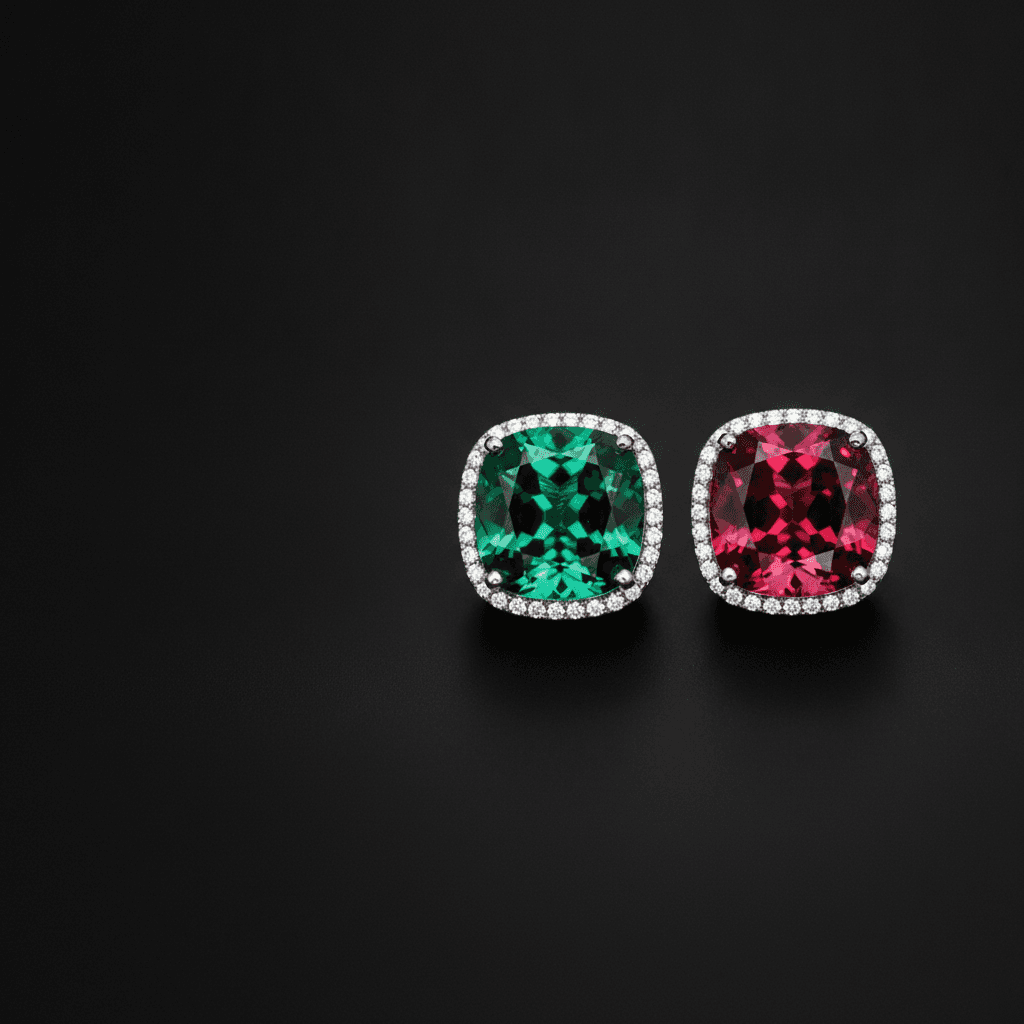
Alexandrite is the color-change variety of chrysoberyl. Fine examples can appear bluish green in daylight-equivalent light and red to purplish red under incandescent light. The strength and quality of that change are important, but color change by itself does not prove that a stone is natural alexandrite.
Laboratory-grown alexandrite has essentially the same chemical and physical identity as natural alexandrite, while color-change synthetic sapphire and other materials can imitate the visual effect. A meaningful natural-origin claim requires gemological testing and, for a consequential purchase, an independent laboratory report.
What causes the alexandrite effect
Chromium contributes to alexandrite's selective absorption of light. Different light sources contain different balances of wavelengths, so the gem's transmitted and reflected color changes with illumination. This is called the alexandrite effect.
The classic shorthand emerald by day and ruby by night is memorable but imprecise. Individual stones vary. Some change from greenish or bluish green to purplish red; others show weaker, browner, grayer, or less complete shifts. Modern LEDs also have different spectral output from daylight and older incandescent lamps, so a seller should identify the light sources used in photographs.
Automatic white balance can make a phone exaggerate or suppress the effect. Ask for unedited continuous video showing the same stone moved between documented light sources. Even then, use the video to judge appearance, not to authenticate the material.
Evaluating color change
GIA says professionals assess alexandrite by the extent of its color change and by the quality of the colors on each side of that change. Consider hue, tone, saturation, percentage of apparent change, and whether the face-up stone remains bright.
A strong shift between attractive colors generally draws more interest than a weak shift with muddy tones. Mixed areas can appear during transition, and pleochroism means direction also influences color. Cut orientation matters because the cutter must balance color change, brightness, shape, and retained weight.
Avoid a single numeric color-change percentage unless the method and lighting are explained. There is no reliable way to derive a universal grade from two seller-edited images.
Clarity, cut, and size
Fine alexandrite is often expected to be relatively clean to the eye, but inclusions can occur. Assess whether they affect transparency, beauty, or durability. An inclusion pattern is not a simple natural-origin test because laboratory-grown material can also contain internal growth features.
Look for balanced light return, limited windowing, and minimal dark extinction. Inspect corners and the girdle for chips. Larger fine stones are less commonly encountered, but size does not override weak color, poor cut, treatment, or uncertain identity.
Compare millimeter dimensions with carat weight. Mounted stones can be difficult to measure accurately, and a photograph cannot supply a verified weight.
Natural, laboratory-grown, and imitation material
Natural alexandrite formed geologically. Laboratory-grown alexandrite is manufactured chrysoberyl with the alexandrite color effect. The Federal Trade Commission allows clear terms such as laboratory-grown, laboratory-created, or a manufacturer-created description when the wording is not deceptive.
Color-change synthetic sapphire is a different laboratory-grown mineral that has long been used to imitate alexandrite. Contrary to a common myth, it can show an obvious color change. Glass and other materials can also imitate the effect. A strong shift therefore does not prove alexandrite, and a weak shift does not prove an imitation.
GIA notes that an inexpensive stone represented as rare natural alexandrite deserves caution. Price alone is not an identification test, but an extraordinary claim should come with proportionate evidence and a return policy.
Reports and geographic origin
GIA's colored-stone identification and origin service can identify alexandrite, state whether it is natural or laboratory-grown, name detectable treatments, and provide a geographic-origin opinion when possible and requested. Not every stone yields an origin conclusion.
Claims such as Russian, Brazilian, Sri Lankan, or East African alexandrite should be treated separately from identity and quality. Origin cannot be confirmed from color behavior alone. Verify a report number with the issuing laboratory and match its weight, measurements, shape, and photograph to the stone.
A report is not a financial appraisal. It does not guarantee a resale price or future appreciation.
Durability and care
Alexandrite ranks 8.5 on the Mohs scale, has excellent toughness, and lacks cleavage. GIA considers it suitable for rings and other daily-worn mountings. It is still possible to scratch, chip, loosen, or damage a stone or setting, so ordinary precautions remain appropriate.
Warm soapy water is safe. GIA says ultrasonic and steam cleaning are usually safe for untreated material in good condition. Fracture-filled stones should receive only warm soapy water, and powered cleaning is a poor default when treatment or condition is unknown.
Store alexandrite separately from diamond and corundum. Tell the jeweler about the gem and any report before repair.
A practical buying checklist
- View the stone under clearly identified daylight-equivalent and incandescent sources.
- Request continuous, unfiltered video and compare the stone in person.
- Ask whether it is natural alexandrite, laboratory-grown alexandrite, synthetic sapphire, or another material.
- Request written treatment and origin disclosure.
- Inspect color change, brightness, cut, inclusions, chips, and setting condition.
- Verify any independent report directly with its laboratory.
- Reject fixed price promises and guaranteed appreciation.
The practical conclusion
Alexandrite is defined by material and color behavior together, not by a dramatic video alone. Evaluate how the stone looks in documented lighting, then use laboratory evidence to separate natural chrysoberyl, laboratory-grown alexandrite, and look-alikes when the distinction matters.
Want more jewelry knowledge?
Download our app for quizzes, care guides, and AI identification