Amethyst Jewelry Guide: Color, Quality, Treatments, and Care
Short answer
Amethyst is the purple variety of quartz. Its main quality factor is color, including hue, tone, saturation, and how evenly the color appears face-up. Most faceted amethyst in the market is expected to have few eye-visible inclusions, so cut and color zoning can be especially noticeable.
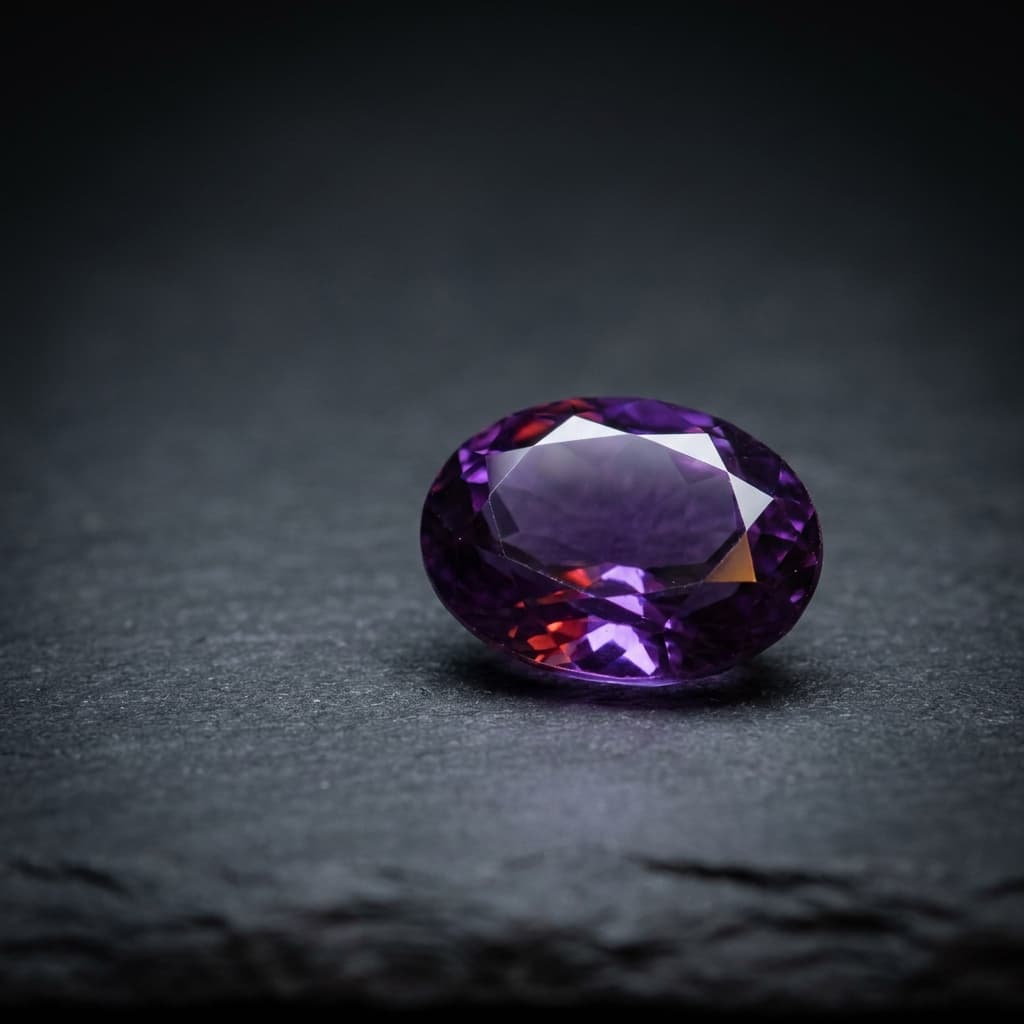
A purple stone in a photograph is not automatically amethyst, and visual inspection cannot reliably determine natural versus laboratory-grown origin. For an important purchase, use clear seller disclosure and consider an independent colored-stone identification report.
What creates the amethyst appearance
GIA describes the preferred amethyst color as strong reddish purple to purple without obvious brownish or bronze modifiers or distracting zoning when viewed from above. Personal preference still matters, and lighter lavender stones can be attractive. The point is to describe the color accurately rather than assume that every dark stone is higher quality.
Tone can become too dark for the lighting environment, making a gem look nearly black and reducing visible brightness. Pale stones may show color zoning more easily. Compare a candidate under neutral daylight-equivalent illumination and normal indoor light, and look from more than one angle.
Quartz commonly forms large crystals, so amethyst is available in many sizes and cuts. Large size alone does not prove rarity or quality. Compare face-up dimensions, color, cut, and condition instead of applying a generic price-per-carat rule.
Color zoning, clarity, and cut
Color zoning consists of areas with visibly different color strength. Cutters orient and shape a crystal to distribute attractive color through the face-up view. A well-chosen cut can improve brightness and presentation, but it cannot change the material's identity.
Many faceted amethysts are eye-clean. Visible inclusions can affect transparency or appearance, although some included material is intentionally carved or cut as cabochons. Inclusions are not proof of natural origin. Laboratory-grown amethyst can contain growth features, and separating it from natural material may require microscopy and advanced testing.
Look for a lively return of light across the stone rather than a large transparent window through the center. Inspect facet junctions for abrasion and chips. In a mounted stone, prongs and reflections can hide damage, so side and back views are useful.
Natural, laboratory-grown, and treated amethyst
Natural and laboratory-grown amethyst share the same basic mineral identity. A synthetic stone is not an imitation when it is actually laboratory-grown quartz, but it must be disclosed accurately. Glass or another purple material made to resemble amethyst is an imitation.
GIA notes that amethyst is rarely treated compared with some gem materials, although heat can alter quartz color and fractures can be filled. Some amethyst is heated to produce citrine-like colors, and some material marketed under special color names may involve treatment or a different quartz variety. Trade names should not replace a clear material and treatment description.
If natural origin matters, ask for a laboratory report rather than relying on bubbles, color zoning, or a home light test. GIA explains that reports are not commonly requested for ordinary amethyst because the testing cost can be high relative to the stone, but a report can be appropriate for a significant item.
Durability and daily wear
Amethyst ranks 7 on the Mohs scale. It is suitable for many jewelry uses, but a daily-worn ring can show abrasion over time and may eventually need repolishing. Hardness measures scratch resistance, not resistance to every blow or environmental condition.
Protect exposed points and facet edges during sports, manual work, and household tasks. Inspect prongs periodically. Store amethyst separately from diamonds, rubies, sapphires, and other harder stones that can scratch it.
GIA notes that some amethyst color can fade with prolonged exposure to intense light and that abrupt temperature changes can cause fractures. Do not leave jewelry for long periods in strong sunlight or expose it to a jeweler's torch without disclosing the stone to the repairer.
Cleaning amethyst safely
Warm soapy water and a soft brush are the conservative choice for an intact stone in a sound setting. Rinse carefully and dry with a soft cloth. Avoid harsh chemicals and rapid temperature changes.
Ultrasonic cleaning may be safe for untreated material in good condition, but it is not appropriate when the stone is fracture-filled, heavily included, cracked, or mounted with vulnerable materials. Steam cleaning is not the default for an unidentified piece. When the treatment or setting is uncertain, ask a jeweler before using powered equipment.
A practical buying checklist
- View the stone under more than one ordinary lighting condition.
- Describe hue, tone, saturation, and visible zoning without filters.
- Check for a central window, dark extinction, abrasion, chips, and loose prongs.
- Ask whether the stone is represented as natural or laboratory-grown.
- Request written disclosure of known treatments.
- Confirm dimensions and item weight without treating mounted weight as gem weight.
- Use a return policy that leaves time for independent examination.
- Verify any laboratory report directly with the issuing laboratory.
The practical conclusion
Amethyst can offer rich color in a wide range of sizes, but a royal story or a dark photograph does not determine identity or value. Focus on visible color, cut, condition, disclosure, and intended wear. Use professional testing when natural origin or treatment would materially change the purchase decision.
Want more jewelry knowledge?
Download our app for quizzes, care guides, and AI identification