Aquamarine Jewelry Guide: Color, Heat Treatment, Quality, and Care
Short answer
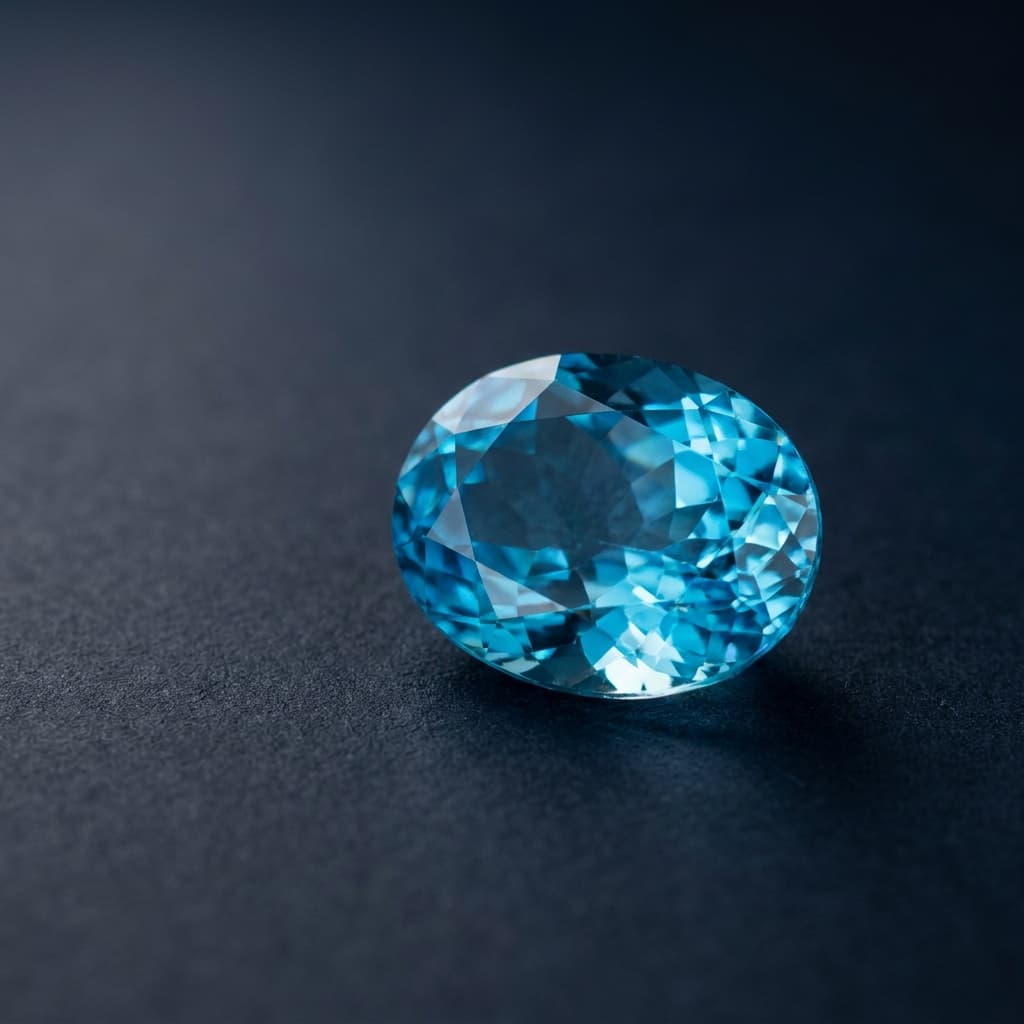
Aquamarine is the blue to slightly greenish-blue variety of beryl, the same mineral family that includes emerald. Fine aquamarine is valued for an attractive blue or greenish-blue color, transparency, and a cut that returns light evenly. Heat treatment is commonly used to reduce a greenish or yellowish component and create a bluer appearance.
A blue transparent stone cannot be identified as aquamarine from a photograph alone. Color overlaps with glass, synthetic materials, treated beryl, topaz, and other gems. If identity, natural origin, or treatment matters to the transaction, ask for an independent colored-stone identification report.
Color is important, but lighting changes it
GIA describes aquamarine as pastel blue, greenish blue, or green-blue. Preferred stones often show moderately strong blue to slightly greenish-blue color without becoming too dark. Larger stones may display color more noticeably, but size alone does not make an aquamarine fine.
View the stone under neutral daylight-equivalent light and ordinary indoor lighting. Camera white balance, reflections from clothing, a blue background, and editing can intensify the appearance. Ask for unfiltered video that turns the stone slowly rather than one saturated hero image.
Pleochroism means aquamarine can show different color strength in different crystal directions. Cut orientation influences the face-up result. Color that looks uneven may come from zoning, orientation, cut depth, or lighting, so describe the observation before assigning a cause.
Clarity and cut
Faceted aquamarine is often very transparent and many cut stones are eye-clean. Visible inclusions can therefore affect appearance, but they should be assessed for type, location, and durability rather than treated as proof that a gem is natural.
Step cuts are common because they display transparency, but aquamarine appears in many shapes. Look for brightness across the face, balanced proportions, and minimal windowing. A transparent area through which the background is easily seen can indicate a shallow or poorly planned region. Very deep cutting can retain weight while reducing face-up size.
Inspect edges and corners for chips. In mounted jewelry, photograph the side and back, since prongs, bezels, dirt, and reflections can conceal fractures or repairs. Compare dimensions with carat weight when both are available.
Heat treatment and other disclosures
GIA explains that much aquamarine is naturally blue-green and can be heated in a controlled environment to remove a greenish component, producing a bluer appearance. The resulting color is considered stable under normal wear. The exact prevalence should not be stated as a universal percentage because supply and market samples vary.
Heat treatment is accepted in the trade, but it should still be disclosed. Treatment status can be difficult to determine in some aquamarine, so a report may state what testing can support rather than promise certainty beyond the method.
Fracture filling is rare but possible. Filled fractures affect cleaning choices and should be disclosed. Laboratory-grown aquamarine and imitations also exist. A natural-looking inclusion or a strong blue color does not settle these questions.
What a laboratory report can establish
GIA evaluates aquamarine but does not issue a simple quality grade such as AAA. Its colored-stone identification report can identify the material, state whether it is natural or laboratory-grown, and name detectable treatments.
Seller-created labels such as AAA or investment grade do not have one universal standard. Ask what measurable observations support the label. Verify a report number on the laboratory's own website and confirm that dimensions, weight, shape, and photograph match the item.
A gemological report is different from an appraisal. It does not predict resale price, insurance replacement cost, or future demand.
Durability and jewelry use
Aquamarine ranks about 7.5 to 8 on the Mohs scale. GIA describes it as durable for jewelry when protected against scratches and hard knocks. Hardness does not make it immune to chipping, existing fractures, loose settings, or damage during repair.
Rings and bracelets receive more impact than earrings and pendants. Consider a setting that protects exposed corners, and remove the piece for sports, manual work, gardening, and household cleaning. Have prongs checked when the stone moves or the setting catches on fabric.
Heat exposure is not recommended even though ordinary light is generally stable. Tell a jeweler about the aquamarine before soldering, resizing, or other torch work.
Cleaning and storage
Warm soapy water is a safe method for aquamarine. Use a soft brush around a secure setting, rinse, and dry gently. GIA says ultrasonic and steam cleaning are usually safe unless the stone has liquid inclusions or fractures. Because an inherited stone's internal condition or treatment may be unknown, gentle manual cleaning is the better default.
Store aquamarine separately from diamonds and corundum, which can scratch it. Keep pieces from rubbing against each other during transport.
A practical buying checklist
- Request neutral, unfiltered photos and video from several angles.
- Compare hue, tone, saturation, and evenness in more than one light.
- Inspect cut, windowing, chips, abrasion, and setting condition.
- Ask whether heating, filling, or other treatment is known.
- Ask whether the stone is represented as natural or laboratory-grown.
- Compare dimensions and weight, and avoid inferring mounted weight from images.
- Use a return policy that permits independent examination.
The practical conclusion
Aquamarine's appeal comes from color, transparency, and wearability, not from ocean lore or a treatment percentage. A sound decision records what is visible, obtains clear treatment and origin disclosure, and uses laboratory testing when those facts matter. That is more reliable than judging a blue stone by a photograph or assuming every clear example is untreated.
Want more jewelry knowledge?
Download our app for quizzes, care guides, and AI identification