Gemstone Care Guide: Why Mohs Hardness Is Not Enough
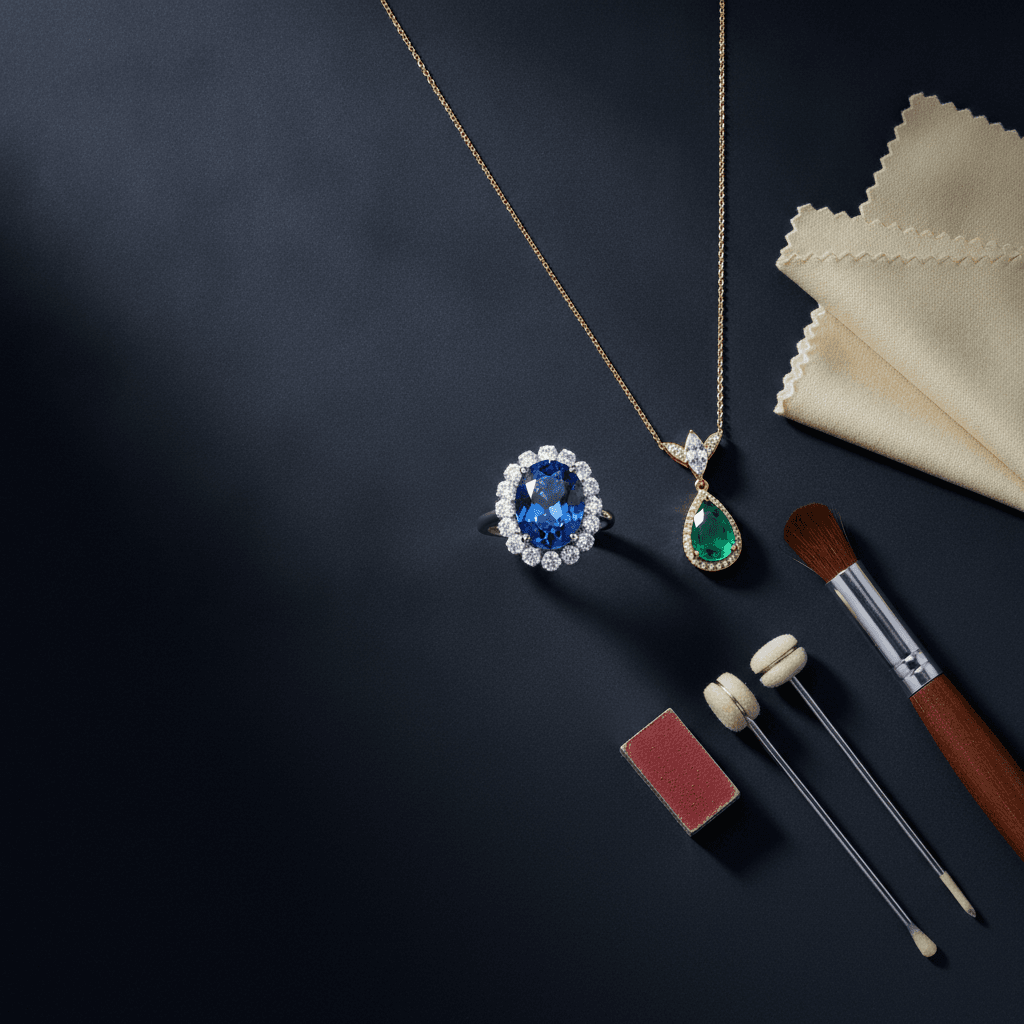
Identify the material before choosing a method
There is no cleaning or wear rule that is safe for every gemstone. The Mohs scale describes resistance to scratching, but GIA explains that gem durability has three parts: hardness, toughness, and stability. A stone may resist scratches yet chip at an edge, contain fractures, react to heat, or carry a treatment that changes what cleaning is safe.
The mounting matters too. A secure untreated ruby in solid metal is a different care problem from a fracture-filled ruby, a glued cabochon, a pearl strand, or an antique closed-back setting. If you do not know the gem, treatment, or construction, document the piece and choose the least aggressive approach.
Hardness is not toughness
Hardness measures how readily one material scratches another. The Mohs scale is ordinal, not evenly spaced: a diamond is not merely a little harder than corundum because the numbers are adjacent. Hardness helps explain why separate storage matters, but it does not predict every type of damage.
Toughness concerns resistance to breaking, chipping, or cracking. Diamond is very hard but can chip along vulnerable directions. Emerald is relatively hard, yet GIA describes its toughness as fair to good and notes that fractures are common. A sharp impact, pressure from a setting, or vibration can matter even when the surface resists ordinary scratches.
Stability concerns reactions to heat, light, chemicals, and temperature changes. Some gems fade with strong light; others can fracture from sudden temperature change. Organic materials such as pearls need different care from crystalline gems. This is why a chart that sorts every stone only by Mohs number is incomplete.
Treatments can change the answer
Colored gems may be heated, dyed, coated, impregnated, oiled, resin-filled, or fracture-filled with glass-like material. GIA warns that heat, solvents, steam, and ultrasonic cleaners can affect some treatments. A stone's species name alone therefore does not settle the cleaning question.
Look for a laboratory report or seller disclosure and verify the report with the issuing laboratory. Keep repair records because heat used during sizing or setting may also matter. An app or photograph can suggest visual possibilities, but it cannot reliably determine internal treatments or certify that an ultrasonic cleaner is safe.
A conservative home-cleaning decision
First inspect the piece in bright light. Stop if a stone moves, a prong is lifted, adhesive is visible, the surface is peeling, the mounting is foil-backed or closed, or the piece combines unknown materials. Do not immerse watches, lockets, hollow pieces, or objects with hair, fabric, wood, enamel, or other vulnerable components.
GIA says many colored gems can be cleaned with warm water, mild soap, and a soft brush. That is a general starting point, not permission to soak every gemstone. Use a bowl rather than an open drain, avoid abrupt temperature changes, brush without forcing bristles beneath a setting, rinse in a separate container, and dry with a soft lint-free cloth.
When identity or treatment is uncertain, use a soft dry cloth or seek professional advice. Never use toothpaste, abrasive powders, acids, bleach, ammonia, solvent blends, flame, boiling water, or scratch tests to identify or clean a stone.
Ultrasonic and steam cleaners need special caution
GIA advises against ultrasonic cleaning for fracture-filled stones, organic gem materials, coated gems, some heat-treated gems, and many materials sensitive to heat or temperature change. It lists examples including tanzanite, feldspar, fluorite, iolite, kunzite, lapis lazuli, malachite, opal, topaz, turquoise, and zircon. Vibrations may also loosen stones or chip gems where girdles touch.
That list is not a substitute for inspection. Even a gem commonly considered suitable may be damaged, treated, included, loose, or mounted with another vulnerable material. Steam adds heat and pressure and should be selected only with equal care.
Match wear to the piece
Daily wear exposes jewelry to impact, abrasion, cosmetics, household chemicals, and snagging. Rings generally experience more force than pendants or earrings. Remove vulnerable or raised settings for sports, lifting, gardening, cleaning, swimming, and similar activities. A gem suitable for a protected pendant may be a poor choice for an exposed everyday ring.
Store pieces separately so harder materials cannot scratch softer ones. Support chains and strands, keep jewelry away from heat and direct sun, and avoid excessively damp or dry locations. Special rules apply to pearls, opals, silver, antique settings, and composite objects.
Build a gem-specific care record
For each important piece, record:
- the identified gem and whether that identity is confirmed;
- disclosed treatments and the report number;
- metal, setting style, adhesives, stringing, and other components;
- maker or laboratory care instructions;
- existing chips, fractures, loose parts, and repairs;
- the last qualified inspection.
Consult GIA's Gem Encyclopedia and the care page for the specific material rather than generalizing from a neighboring Mohs number. If value, safety, or sentimental importance makes a mistake consequential, ask a trained professional to inspect the actual object. Responsible gemstone care begins by keeping uncertainty explicit.
Want more jewelry knowledge?
Download our app for quizzes, care guides, and AI identification