How to Clean Gold Jewelry at Home—When It Is Safe
First decide whether the piece belongs in water
Some sound, modern gold jewelry can be cleaned at home with warm water, mild soap, and a soft brush. That method is not safe merely because an item looks gold. Most gold jewelry is an alloy, and many gold-colored pieces are plated, filled, hollow, deliberately patinated, enamelled, glued, or set with gems whose treatments are unknown.
The Canadian Conservation Institute notes that pure gold is resistant to corrosion but gold alloys can darken because their silver or copper components react with the environment. It also warns that gold-plated objects are not entirely gold. Identify the construction before trying to restore color or shine.
Inspect before mixing a solution
Work in bright light over a towel. Check every prong, bezel, link, hinge, clasp, solder seam, stone, and decorative surface. Do not immerse the piece if:
- a stone moves or a prong is lifted;
- adhesive, foil, hair, fabric, wood, or another organic component is present;
- the item is hollow, closed-back, or could trap liquid;
- plating is worn or flaking;
- enamel, deliberate oxidation, patina, or an antique finish may be altered;
- the gem identity or treatment is unknown;
- the maker's care instructions prohibit immersion.
Photograph valuable or inherited jewelry before cleaning, including hallmarks and existing damage. A mark can help identify metal quality, but it does not authenticate the whole piece or tell you how every stone was treated.
A gentle method for suitable pieces
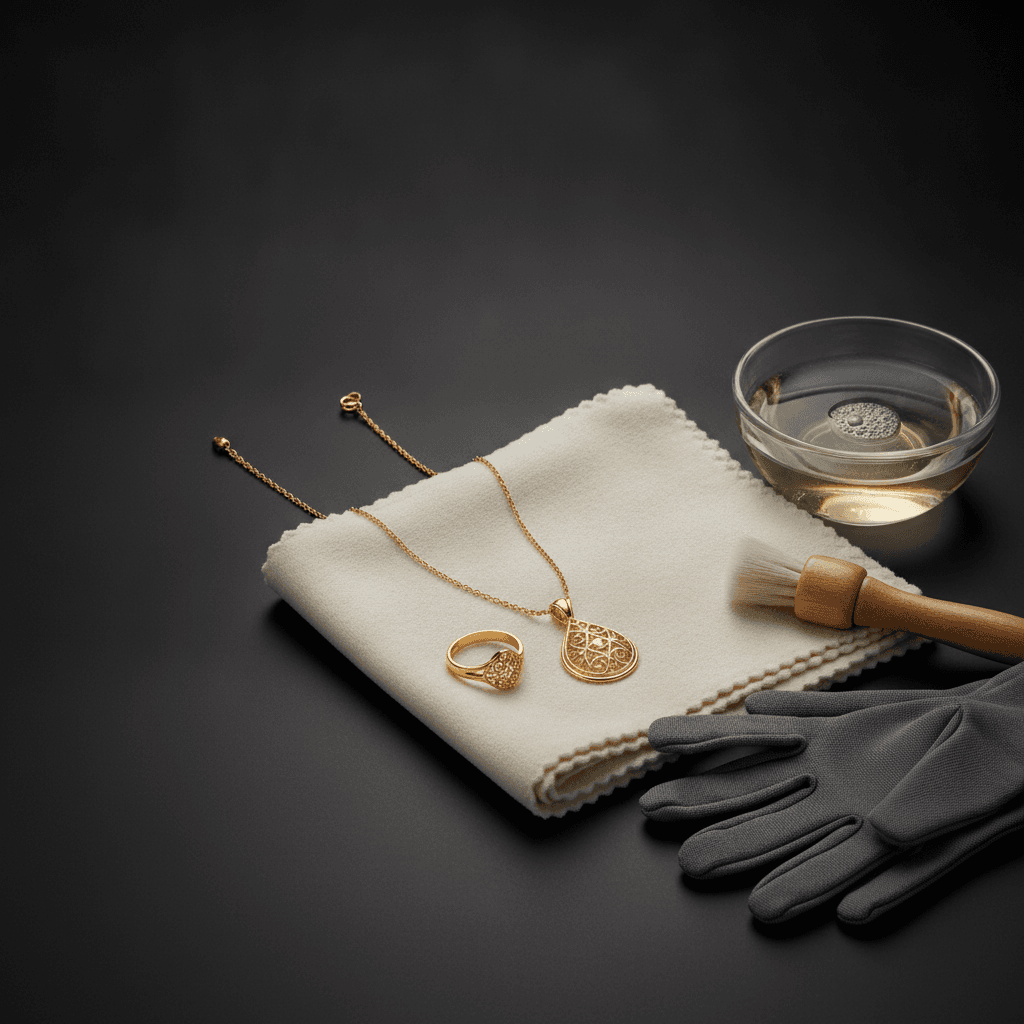
For plain, sound gold jewelry or a piece whose gems and construction are confirmed compatible, prepare a small bowl of warm—not hot—water with a small amount of mild soap. Avoid products with bleach, abrasives, strong degreasers, moisturizers, or unknown additives.
Let light residue soften briefly rather than following a fixed soak time for every object. Use a new, very soft brush to clean accessible surfaces. Do not force bristles beneath prongs or flex a delicate chain. Rinse in a second bowl of clean lukewarm water instead of directly over a sink. Pat with a soft lint-free cloth and let the piece dry fully in a stable environment.
If residue remains in an inaccessible setting, stop rather than escalating to sharper tools, stronger chemistry, or longer soaking. A professional can inspect the setting and choose a method based on the actual materials.
Gemstones change the cleaning decision
Diamond, sapphire, or ruby in the design does not automatically make the whole piece suitable for an ultrasonic or steam cleaner. Gems may be fracture-filled, dyed, coated, or otherwise treated; stones can be loose; and another component may be vulnerable. GIA warns that ultrasonic vibration can shake stones loose or chip gems whose edges touch.
Pearls should never be placed in ultrasonic or steam cleaners. GIA also identifies many heat-sensitive, treated, organic, or porous materials for which common jewelry-cleaning equipment is inappropriate. Use the care guidance for the specific gem and treatment, not a general label such as hard stone.
Methods to avoid
Do not use toothpaste, baking soda paste, scouring powder, abrasive cloth intended for another metal, chlorine bleach, pool chemicals, acid, or an improvised solvent mix. GIA states that chlorine bleach can pit or damage gold alloys. Abrasives can scratch high-karat gold, remove plating, soften crisp engraving, and change a satin or patinated finish.
Do not boil jewelry or expose it to sudden temperature change. Do not scratch the metal to test purity. Do not use a magnet, color, or a home acid test as conclusive identification. Those observations may generate questions, but professional metal testing and documented hallmarks are needed when composition matters.
How often should gold jewelry be cleaned?
There is no universal schedule. Wipe frequently handled pieces when residue appears and use a full wet clean only when the materials support it. Rings worn daily may accumulate more lotion than earrings stored in a box. Unnecessary repeated brushing and polishing can add wear.
GIA offers periodic professional inspection as general consumer guidance. The practical interval should reflect wear, setting, manufacturer instructions, repair history, and any insurer requirements. An inspection is more important than maximizing sparkle because a clean but loose stone is still at risk.
When professional care is preferable
Choose professional assessment for antique or high-value jewelry, intricate settings, unknown gems, visible damage, deep residue, worn prongs, plated surfaces, or repairs. Ask the jeweler to explain the materials they identified, the process they propose, and whether cleaning could alter the finish or treatment. For historically important objects, an objects conservator may be more appropriate than a commercial polishing service.
Safe home cleaning is intentionally modest. Inspect first, use only a compatible gentle method, rinse over a contained surface, and stop before uncertainty turns routine care into irreversible damage.
Want more jewelry knowledge?
Download our app for quizzes, care guides, and AI identification