How to Care for Pearls Without Damaging the Nacre
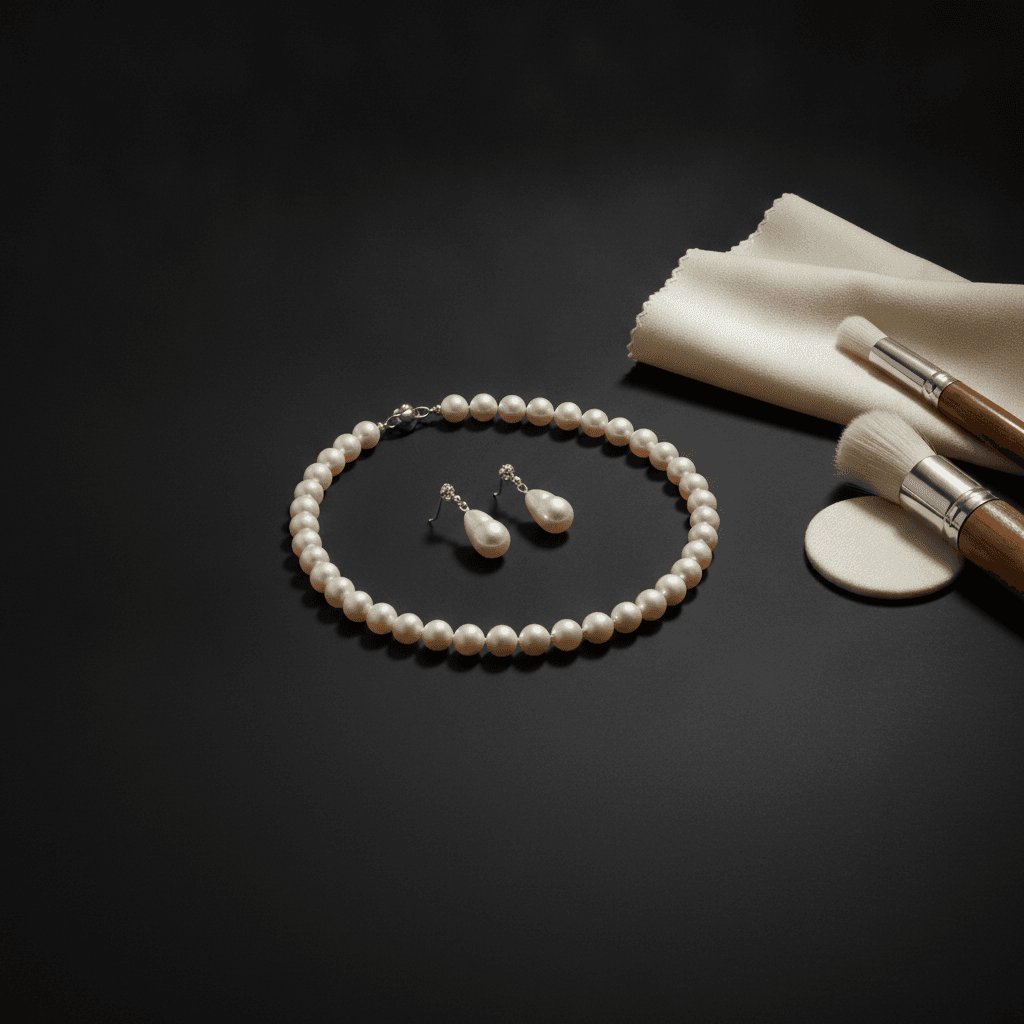
Pearls need gentle care, not fear
Pearls are organic gem materials produced by mollusks. Their surface is softer and more chemically sensitive than many familiar mineral gems, but properly cared-for pearl jewelry can remain wearable for a long time. GIA rates pearl at 2.5 on the Mohs hardness scale and notes that it is easily scratched or abraded. Hardness is only one property: age, dehydration, processing, coatings, dye, stringing, and the jewelry's construction also affect care.
The goal is to minimize abrasion, excessive heat, acids, and unnecessary chemical exposure while keeping the piece clean and supported.
Put pearls on after personal-care products
GIA identifies hair spray, perfume, cosmetics, perspiration, and other chemicals or acids as possible sources of damage. Apply perfume, lotion, sunscreen, makeup, and hair products first and let them dry before putting on pearls. Remove pearl jewelry before using cleaning products, swimming, bathing, or exercising heavily.
This does not mean a single touch of skin automatically ruins a pearl. It means repeated residue should not be allowed to build up. After wearing, gently wipe the pearls, clasp, and accessible string with a very soft, clean cloth. Do not rub aggressively or use an abrasive polishing cloth intended for metal.
Clean only when needed
For routine care, wiping is usually enough. GIA says warm, soapy water can be used for occasional thorough cleaning and specifically warns never to use an ultrasonic or steam cleaner on pearls. Use a small bowl, a very mild soap, and a new soft brush or cloth. Avoid soaking a necklace longer than necessary because stringing can absorb water and stretch.
Work gently over a towel or contained surface. Rinse with a separate bowl or carefully damp cloth rather than an open sink. Lay a strand flat on a clean towel to dry, allowing the string to become completely dry before lifting, wearing, or storing it. Do not speed drying with a hair dryer, radiator, strong sun, or other heat.
Do not use vinegar, lemon juice, baking soda, toothpaste, ammonia, bleach, alcohol, jewelry dip, or abrasive powder. Pearls contain calcium carbonate and can be damaged by acids. A product labeled as a jewelry cleaner is not necessarily pearl-safe.
Account for treatments and imitations
Pearls may be dyed, coated, impregnated, bleached, or irradiated. GIA notes that some treatments can change over time. If the color appears concentrated around drill holes, a coating is peeling, or the surface is unusually uniform, do not experiment with solvents or polish. Ask a qualified gemologist or jeweler to examine it.
Pearl-like beads can also be shell, glass, plastic, or coated material. A photograph cannot reliably establish identity or treatment, and rubbing a pearl against a tooth is not a responsible authentication method. It can contaminate or abrade the surface and still does not provide a conclusive result. Preserve receipts, laboratory reports, and provenance rather than relying on a home test.
Store pearls away from harder jewelry
Place pearl jewelry in a soft, clean pouch or lined compartment by itself. Diamonds, corundum, metal edges, and even rough dust can scratch the surface. Lay necklaces flat or in a broad curve without pulling on the string. Do not hang a heavy pearl strand for long-term storage because gravity can stress the thread.
Avoid strong heat, direct sun, and excessively dry storage. GIA says aging, dehydration, and intense heat can make some pearls more fragile or cause discoloration, splitting, or cracking. It also cautions that very dry places such as some safe-deposit environments may be unsuitable for pearls and opals. There is no need to invent a single household humidity target; aim for a stable, moderate indoor environment and seek conservation advice for historically important pieces.
Do not enclose pearls while damp. Avoid unknown plastics, dyed fabric, rubber, adhesive tape, and paper that may transfer chemicals. Keep the original fitted case if its materials remain stable, or use a modern jewelry box made for delicate objects.
Watch the string and setting
On a necklace, inspect the thread near the clasp and between pearls for stretching, discoloration, fraying, or gaps. Knots between pearls can limit loss if a strand breaks, but knotting alone does not prove quality or age. Restringing frequency depends on wear, thread, weight, and condition. GIA's general care article suggests annual restringing for frequently worn pearls, while its pearl FAQ describes periodic restringing. Treat those as prompts to inspect, not a fixed deadline for every strand.
For pearl rings and earrings, look for movement, adhesive failure, bent posts, or damaged cups. Many pearls are drilled and attached with adhesive or mechanical fittings. Water, heat, and solvents can affect those assemblies even if the pearl surface appears unchanged.
When professional help is the safer choice
Seek a qualified jeweler, gemologist, or objects conservator if a strand is valuable or inherited, the string is failing, the surface is peeling or powdery, a pearl is loose, the treatment is unknown, or the piece has antique metalwork. Professional examination can document condition and recommend repair, but it should not be presented as authentication or appraisal unless those services are explicitly performed.
Pearl care is a sequence of small, conservative choices: products first, pearls last; wipe after wear; use warm soapy water only when appropriate; dry completely; and store separately without heat or abrasion.
Want more jewelry knowledge?
Download our app for quizzes, care guides, and AI identification