Natural vs. Cultured vs. Imitation Pearls: What Testing Can Show
Short answer
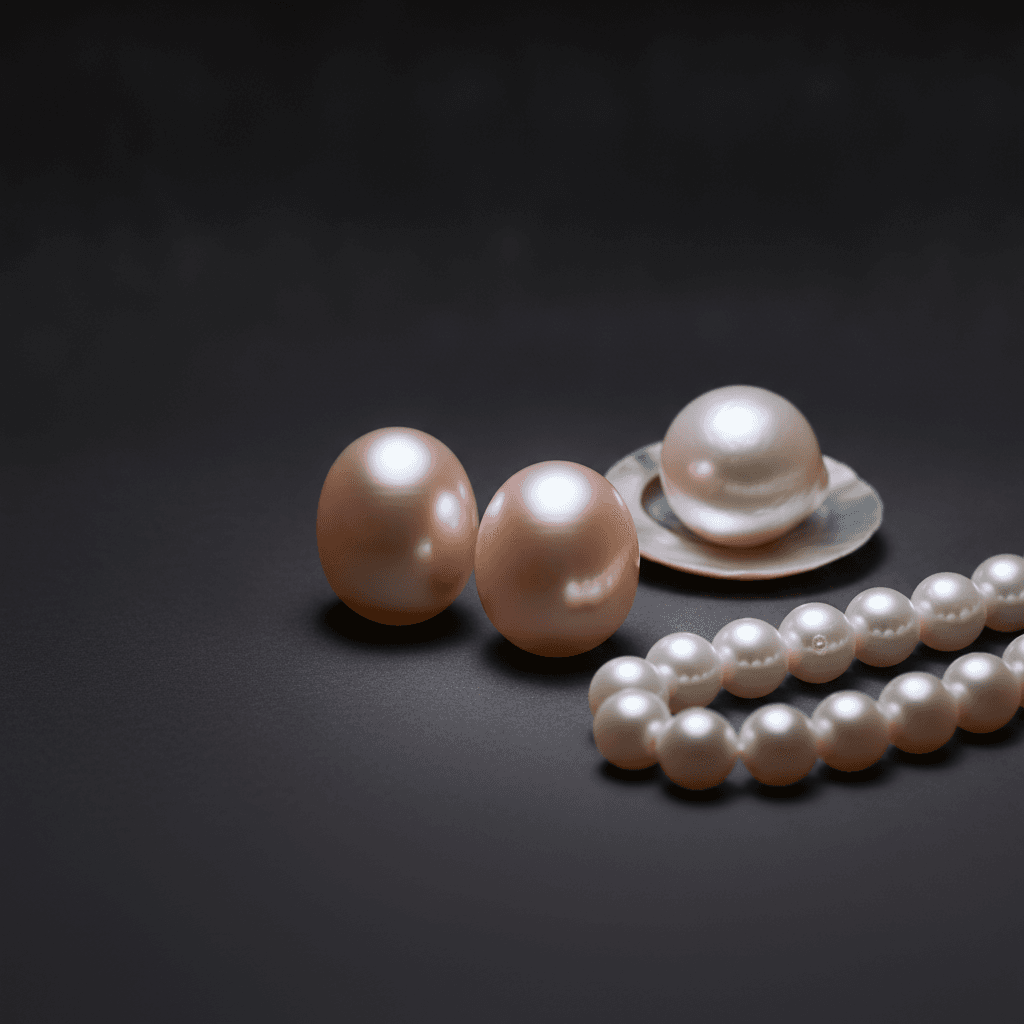
Natural pearls form in mollusks without human intervention. Cultured pearls also form in mollusks, but people intentionally begin the growth process by inserting tissue, a bead, or another nucleus. Cultured pearls are real pearls. Imitation pearls are objects made from other materials to resemble pearls.
Appearance and texture are not enough to separate every category. GIA uses real-time X-radiography, visual examination, spectroscopy, X-ray fluorescence, and other methods to study internal structure, environment, treatment, and mollusk origin where possible. A tooth test is not a reliable substitute and can contaminate or abrade a surface.
Natural pearls
GIA defines natural pearls as pearls that form without human help. They usually begin around a microscopic irritant or injury within a pearl-producing mollusk. The common story that every pearl starts around a grain of sand is an oversimplification.
Natural pearls can be nacreous or non-nacreous, saltwater or freshwater, and round or irregular. Their rarity and historical context can make laboratory identity important, especially for antique jewelry. An old setting or family story does not prove that a pearl is natural; cultured replacements and restrung necklaces are possible.
Do not infer natural origin from irregular shape, thick nacre, surface texture, age, or price. Those clues can overlap with cultured products. Internal growth structure is central to laboratory separation.
Cultured pearls
Cultured pearls grow through human intervention and care. A technician introduces a bead and mantle tissue or tissue alone, depending on the mollusk and culture method. The mollusk deposits pearl material during growth.
Major cultured categories include akoya, South Sea, Tahitian, and freshwater pearls. These labels refer to different mollusks, environments, regions, and culture methods; they are not simple quality ranks. Each category spans a range of size, shape, color, luster, surface condition, nacre, and matching.
The word cultured must remain visible in a product description. Calling a cultured pearl natural because it grew in a living mollusk is misleading. GIA explicitly reserves natural pearl for growth without human intervention.
Imitation and assembled pearls
Imitation pearls may use glass, plastic, shell, composite, or coated beads. They can look convincing and can be appropriate costume jewelry when sold honestly. Some products combine pearl material with other components or use coatings and fills.
Surface wear, drill holes, weight, temperature, or a gritty sensation may provide observations, but none is a comprehensive authentication method. A coating can feel textured, a cultured pearl can have a smooth area, and rubbing a pearl on teeth can scratch, soil, or damage it. Do not scrape, burn, dissolve, or cut a pearl to test it.
Photograph the full strand, clasp, drill holes, surface, blemishes, overtone, and any peeling or exposed layers. These details can help a specialist decide which tests are appropriate.
How laboratories separate natural and cultured pearls
GIA identifies microradiography as the most reliable non-destructive way to view internal pearl structure. X-radiography can reveal patterns consistent with natural growth, bead-cultured construction, or non-bead cultured growth. More complex cases may use micro-computed tomography to build a three-dimensional view.
GIA also uses visual examination, ultraviolet-visible reflectance spectroscopy, X-ray fluorescence, and fluorescence methods. These can help evaluate environment, detect some treatments, and study color. Pearl identification can be technically difficult, and even laboratories sometimes need multiple methods.
A GIA Pearl Identification Report can state natural or cultured origin, type of nucleation, environment, mollusk when determinable, and detectable treatments. Classification services can also describe quality factors. The report scope should be checked before assuming it answers every origin or value question.
Seven pearl value factors
GIA's seven pearl value factors are size, shape, color, luster, surface, nacre, and matching.
Luster considers the strength and sharpness of reflections. Surface assessment records blemishes and their effect. Nacre quality considers the pearl material and, for bead-cultured pearls, whether it is acceptably formed. Matching matters in strands, pairs, and multi-pearl pieces; deliberate multicolor designs should be judged for coherent selection rather than uniformity alone.
Size and roundness can affect market comparison, but larger or rounder does not automatically outweigh weak luster, poor surface, thin nacre, damage, treatment, or mismatching. Evaluate the whole item and the correct pearl category. Avoid fixed price ranges in a general guide because current quality, documentation, condition, and market matter.
Treatments and color
Pearls can be bleached, dyed, irradiated, coated, filled, or otherwise processed. Some treatments are routine and some materially change color or care. A vivid dark, golden, pink, or other hue cannot be classified as natural-color from a photograph.
Ask the seller to state natural or treated color in writing. GIA uses advanced testing to separate natural and treated color in appropriate cases. Keep treatment disclosures with the report and invoice.
Care for pearl jewelry
Pearl is relatively soft and vulnerable to abrasion, chemicals, heat, and dehydration. Put pearls on after cosmetics, perfume, and hair products. Wipe them with a clean, soft, slightly damp cloth after wear and allow the strand to dry before storage.
Do not use ultrasonic or steam cleaners. Avoid acids, harsh detergents, abrasive cloths, and soaking strung pearls. Store pearls separately so harder jewelry cannot scratch them. Have frequently worn strands checked and restrung when thread becomes stretched, dirty, or weak.
A practical buying checklist
- Ask whether each pearl is natural, cultured, imitation, or assembled.
- Ask the cultured type and whether color or surface treatments are present.
- Compare luster, surface, nacre, shape, size, color, and matching.
- Inspect drill holes, clasp, string, repairs, and replacement pearls.
- Treat natural-origin claims as laboratory questions.
- Verify a report with the issuing laboratory and match it to the item.
- Keep provenance separate from gemological identity; both may matter for antique jewelry.
The practical conclusion
Natural, cultured, and imitation are material and growth distinctions, not shortcuts for beauty. Cultured pearls are genuine products of a mollusk, while natural origin requires evidence of growth without human intervention. When that distinction affects price, insurance, or heritage, use a laboratory report rather than a tooth test or family assumption.
Want more jewelry knowledge?
Download our app for quizzes, care guides, and AI identification