Ruby vs. Red Spinel: Differences, Look-Alikes, and Reliable Testing
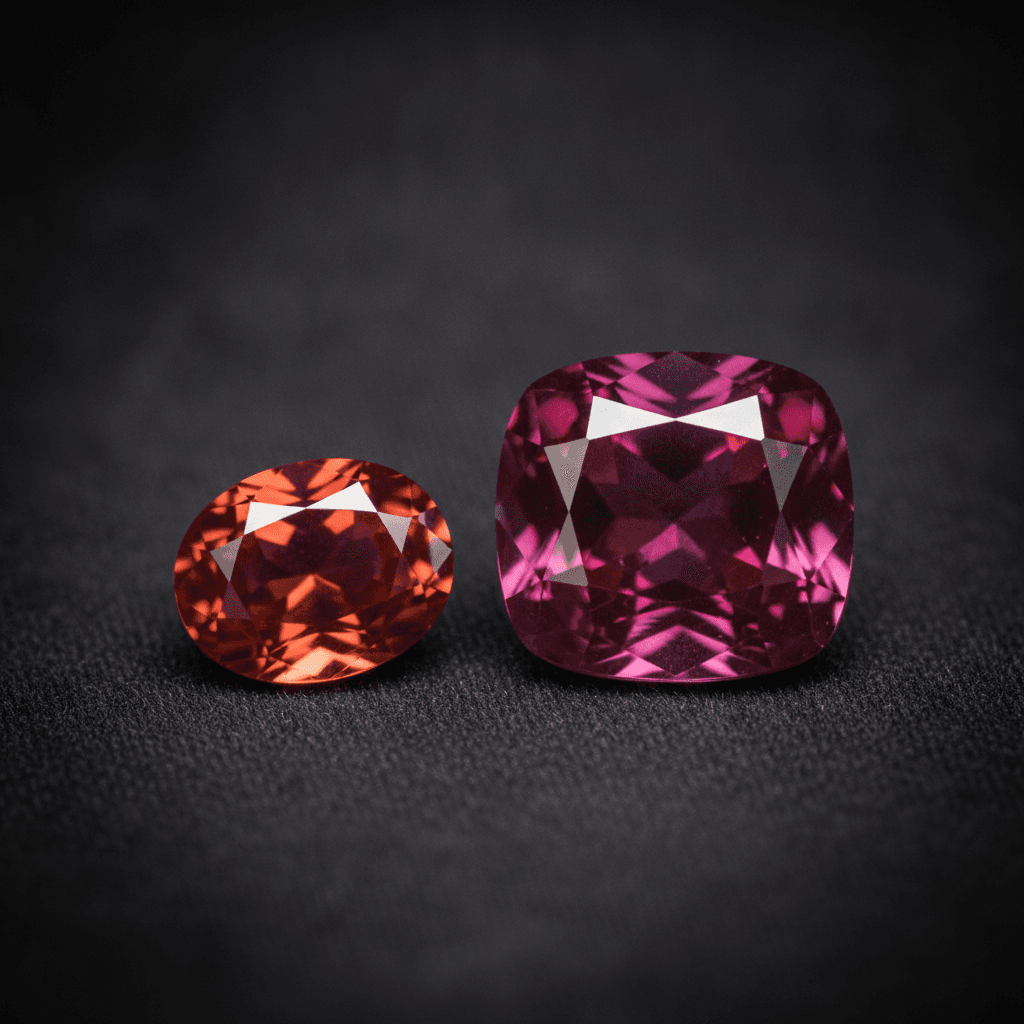
Short answer
Ruby is red corundum, while red spinel is a different mineral with a different crystal structure and composition. Their colors can overlap closely enough that famous historic red spinels were once regarded as rubies. Hue, fluorescence, apparent facet doubling, and inclusion patterns can provide clues to trained gemologists, but none should be used alone as a home authentication verdict.
For a purchase, sale, insurance decision, or inherited object where identity matters, request an independent colored-stone identification report. A photograph cannot reliably separate ruby, spinel, laboratory-grown material, glass, or other red stones.
Material differences
Ruby is the red variety of corundum, an aluminum oxide mineral. Chromium contributes to ruby's red color. Spinel is magnesium aluminum oxide and occurs in red, pink, orange, purple, blue, and other colors. Chromium can also contribute to red spinel.
Corundum is doubly refractive except along specific optical directions; spinel is singly refractive in ordinary gemological conditions. Gemologists can use optical instruments to measure refractive behavior, along with refractive index, spectrum, magnification, and other evidence.
Trying to see doubled back facets through a loupe is not a dependable consumer test. Orientation, cut, mounting, magnification, focus, strain, and image quality can hide or mimic the effect. Some red stones will not expose enough of the pavilion for a useful observation.
Why color is not enough
Ruby ranges through red hues with possible purple, orange, or brown modifiers. Red spinel can also show vivid red, pinkish red, purplish red, or orangy red. A rule that ruby must look purplish while spinel must look orange is false.
Lighting and camera processing add more uncertainty. Red channels clip easily in phone images, and white balance can shift a stone toward pink, orange, or purple. Surrounding yellow or white metal changes contrast. Request neutral, unfiltered media, but use it to compare appearance rather than material identity.
Terms such as pigeon blood are trade color descriptions with varying use. They do not authenticate ruby, establish origin, or create a universal grade.
Fluorescence is a clue, not a verdict
Many rubies fluoresce red under ultraviolet light because of chromium, but the response varies with chemistry, iron content, light wavelength, treatment, and stone. Red spinel can also fluoresce strongly. Synthetic ruby, synthetic spinel, and other materials can produce responses that confuse a simple comparison.
Ultraviolet lamps also create eye and skin hazards when misused. Do not present UV response as an accessible pass/fail test. Laboratories interpret fluorescence alongside spectra, internal features, refractive properties, and other observations.
Inclusions and historical confusion
Some rubies contain rutile silk, crystals, healed fissures, fingerprints, or treatment-related features. Spinel can contain crystals, octahedral inclusions, growth features, or other internal characteristics. These descriptions are educational examples, not universal checklists.
Laboratory-grown ruby and spinel can contain their own growth features, while natural stones may be clean. Treatment can alter inclusions. A blurry photograph of one inclusion cannot establish natural origin.
The Black Prince's Ruby in the British Imperial State Crown is a famous red spinel, as is the Timur Ruby. These examples show why visual resemblance historically caused confusion; they do not imply spinel is fake ruby. Spinel is a recognized gem in its own right.
Treatments and laboratory-grown material
Ruby can be heated, diffusion treated, fracture filled with glass or other substances, dyed, or receive other enhancement. Treatment can materially affect durability, repair, and market comparison. Spinel is less commonly treated, but heating and other processes are possible.
Laboratory-grown ruby and spinel share key composition and properties with their natural counterparts but must be disclosed. A manufactured red stone is not automatically an imitation; the correct term depends on what it is.
Ask for written natural or laboratory-grown status and treatment disclosure. Avoid scratch, acid, heat, thermal-conductivity, or destructive tests.
What a laboratory report can establish
GIA colored-stone reports can identify ruby or spinel, state whether the material is natural or laboratory-grown, describe detectable treatment, and in qualifying cases provide a geographic-origin opinion when possible and requested.
Origin claims such as Myanmar, Mozambique, Sri Lanka, or Tanzania cannot be read from hue. Verify the report number and make sure the measurements, weight, shape, and photograph match the item. A report does not provide a financial appraisal or guarantee a future price.
Durability and care
Ruby ranks 9 on the Mohs scale and generally has good toughness. Spinel ranks 8 and is also durable for many jewelry uses. Existing fractures, filling, cut corners, and setting condition can still create risk.
Warm soapy water is a conservative cleaning method for both. Untreated and routinely heated material in good condition may tolerate powered cleaning, but fracture-filled ruby and any uncertain stone need gentler care. Glass-filled ruby can be especially vulnerable to heat and chemicals. Tell a jeweler about identity and treatment before repair.
Store pieces separately. Ruby can scratch spinel and many other gems, while diamond can scratch both.
A practical buying checklist
- Ask whether the stone is represented as ruby or spinel and on what evidence.
- Request natural or laboratory-grown status and treatment disclosure.
- Do not rely on hue, UV fluorescence, doubling, or inclusions alone.
- Request an independent report for a consequential claim.
- Verify the report directly and match its details to the item.
- Inspect chips, fissures, filling, abrasion, and the mounting.
- Treat origin and value as separate questions.
The practical conclusion
Ruby and red spinel deserve separate identities, but their visual overlap makes a home comparison page risky if it promises easy tests. Use visible clues to document the question, then rely on non-destructive laboratory testing for a defensible answer.
Want more jewelry knowledge?
Download our app for quizzes, care guides, and AI identification