Tanzanite Guide: Color, Heat Treatment, Durability, and Buying Questions
Short answer
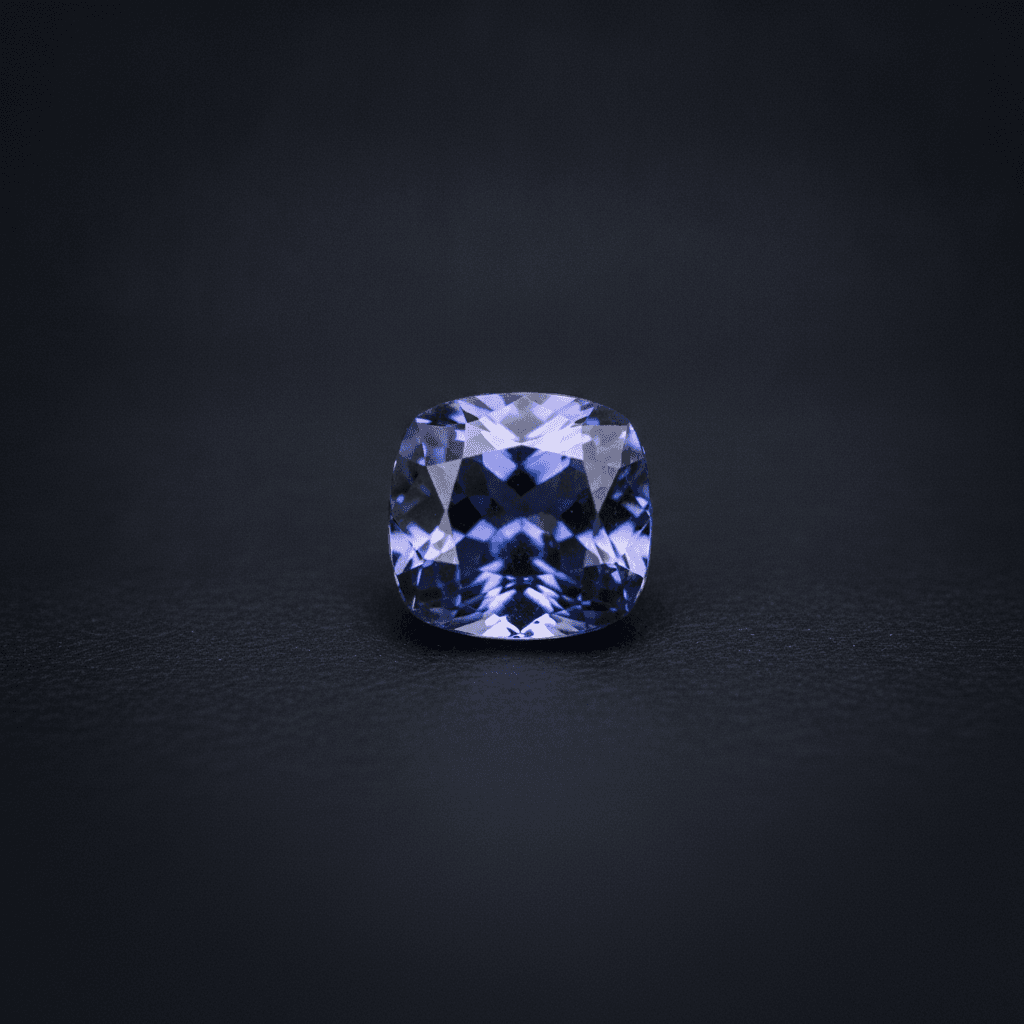
Tanzanite is the blue-to-violet gem variety of zoisite associated with a single commercial source near Merelani in northern Tanzania. It is pleochroic, so the crystal can display different colors in different directions. Most tanzanite is routinely heated to shift a predominantly brownish appearance toward blue, violet-blue, or violet-purple.
Its limited source is notable, but it does not justify a guaranteed depletion date, a claim that prices must rise, or an investment promise. Evaluate the individual stone's color, clarity, cut, size, treatment, condition, and documentation.
Discovery and source
GIA records tanzanite as a relatively recent gem discovery, first found in 1967. Maasai tribesman Ali Juuyawatu is credited with finding an early crystal, and Tiffany & Co. named the blue-violet zoisite variety after Tanzania.
Stories about lightning or a grass fire turning brown crystals blue are often repeated as lore. They should not be presented as the documented mechanism of discovery without a reliable historical source. Modern heating demonstrates that color can be modified, but that does not verify a particular discovery legend.
GIA identifies the Merelani hills as tanzanite's source. A single-source geology can make supply different from gems mined in many regions, yet mine output, inventories, demand, cutting yield, and quality distribution all affect the market. Avoid countdown claims stating that deposits will be exhausted in a specific number of years unless a current geological study supports them.
Pleochroism and face-up color
Tanzanite shows different colors along different crystal directions. GIA describes three directional colors in the crystal. Heating commonly reduces brownish or greenish components, while cut orientation determines how much blue or violet appears face-up.
Color is a key quality factor. Deep saturated violet-blue or blue-violet appearances are often preferred, but overly dark material can lose brightness. Smaller stones may show less saturation, while a well-cut stone balances color, brightness, and face-up size.
View tanzanite under neutral daylight-equivalent and ordinary indoor light. Phone cameras can shift violet toward blue or intensify saturation. Request unfiltered photos and video from several angles, and compare them with the stone in person during a return period.
Clarity, cut, and size
Eye-visible inclusions can reduce transparency and may affect durability when they reach the surface. An eye-clean appearance is common in fine faceted material, but lack of visible inclusions does not prove natural origin.
Cutters make tradeoffs between retaining weight and presenting a preferred blue or violet direction. Examine whether the stone returns light evenly, has a transparent window, or contains large dark areas. Check the girdle, corners, and prong contact points for chips.
Carat weight and face-up dimensions should be considered together. A deep stone may retain more weight without appearing proportionally larger. A laboratory report records measurements and identity; it is not a market valuation.
Heat treatment and other possible treatments
GIA says tanzanite is routinely heat-treated to move predominantly brownish material toward blue-to-purple colors. The treatment is stable and does not create additional durability concerns under normal wear. Instead of presenting an exact temperature as a consumer test, state the treatment and its purpose.
Coatings have occasionally been used to modify color. A coating is not permanent and can be scratched or worn. Fracture filling is uncommon but possible, and filling material can change over time.
Ask for treatment disclosure in writing. GIA evaluates tanzanite but does not assign a universal quality grade. Seller labels such as A, AA, or AAA are company systems, not shared standards. An identification report can state whether the material is natural or laboratory-grown and name detectable treatments.
Durability and setting choice
Tanzanite ranks about 6 to 7 on the Mohs scale and has fair-to-poor toughness with cleavage. It can be worn in many types of jewelry with care, but it is more vulnerable to scratches and hard blows than sapphire.
Earrings and pendants usually receive less impact than rings or bracelets. A protective setting can reduce exposure, but daily wear still requires caution. Remove tanzanite before sports, manual work, gardening, cooking tasks with rapid temperature changes, or household cleaning.
Tell a jeweler the stone is tanzanite before repair. Very high heat, sudden temperature changes, steam, and ultrasonic vibration can create risk.
Cleaning and storage
GIA recommends warm soapy water. Use a soft brush only around a secure setting, rinse, and dry carefully. Ultrasonic and steam cleaners are not recommended for tanzanite.
Store the piece in a separate padded compartment so diamonds, sapphires, and other harder materials cannot scratch it. Avoid pressure on exposed corners and inspect prongs periodically.
A responsible buying checklist
- Ask whether the stone is represented as natural tanzanite and whether it is heated.
- Request disclosure of coating, filling, or any other known treatment.
- Compare blue and violet appearance under more than one light source.
- Inspect windowing, dark areas, inclusions, chips, and setting condition.
- Treat AAA labels as seller-defined and ask what they measure.
- Verify a laboratory report and match its dimensions to the stone.
- Reject guaranteed appreciation, depletion countdowns, and rarity multipliers presented without current evidence.
The practical conclusion
Tanzanite has an unusual source, strong directional color, and a well-documented treatment history. Those facts make it interesting without turning it into a speculative asset. Buy for the individual stone and intended use, keep treatment and durability explicit, and use independent identification when the claim is financially important.
Want more jewelry knowledge?
Download our app for quizzes, care guides, and AI identification