Topaz Jewelry Guide: Colors, Treatments, Durability, and Care
Short answer
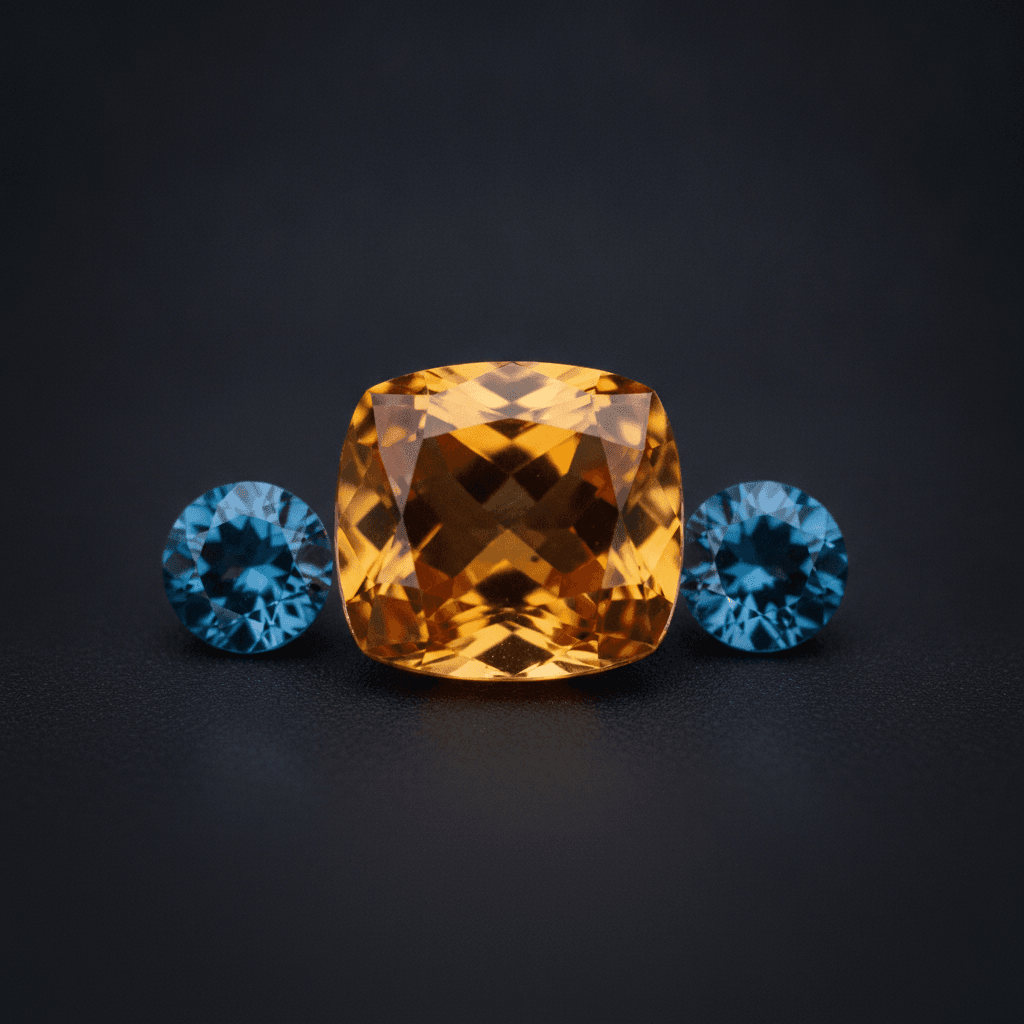
Topaz is a gem mineral that can be colorless or appear in yellow, orange, pink, red, brown, and blue hues. Color is a major quality factor, but names such as imperial, Swiss blue, or London blue are trade descriptions rather than universal grades. Much blue topaz begins as colorless material and receives irradiation followed by heat to create a stable blue appearance.
Topaz ranks 8 on the Mohs hardness scale, yet it has cleavage and can split from a hard blow, extreme pressure, or sharp temperature change. That combination makes it scratch-resistant but not indestructible. Treatment, setting, and intended wear should all shape a buying or care decision.
Topaz color and trade names
GIA describes topaz in a broad palette. Red, pink, and orange material can be rare, while blue and colorless topaz are widely available. The color called imperial topaz is highly prized, but GIA notes that there is no official standard for the term. Some sellers use it for orange, pink, red, or purple-related colors, while others reserve it for narrower reddish-orange ranges.
Ask a seller to describe the actual color rather than relying on imperial alone. View the gem under neutral light and ordinary indoor light, since dark backgrounds, warm lamps, and edited photographs can shift the impression. Look for evenness, brightness, and whether large areas go dark or transparent face-up.
Names such as smoky topaz and topaz quartz have historically been applied to brown or yellow quartz. Those names are misleading because quartz and topaz are different minerals. A listing should identify the material plainly rather than borrow the topaz name for a look-alike.
Why blue topaz is usually treated
Strong blue color is commonly created by irradiating colorless topaz and then heating it. GIA's treatment guidance describes the process as frequent in the market and notes that blue topaz color is generally stable under ordinary conditions, although high repair heat can damage color.
Irradiation is a treatment, not evidence that the material is laboratory-grown. The underlying stone can still be natural topaz. Treatment should be disclosed so the buyer understands what produced the appearance and which care instructions apply.
Coated topaz is different. A thin surface coating can create rainbow, pink, or other effects but can be scratched or worn away. Mystic topaz is a common coating-related trade presentation. Inspect facet junctions and worn areas, and ask whether color comes from a coating, irradiation and heat, or natural causes.
Color, clarity, cut, and size
GIA notes that faceted blue topaz is often free of eye-visible inclusions. Rarer colors may still be attractive with inclusions. Clarity expectations therefore depend on the color variety and the complete appearance rather than one universal grade.
Topaz crystals can be large, so large carat weight does not automatically signal exceptional rarity. Compare millimeter dimensions as well as weight, and evaluate how cut affects brightness, windowing, and face-up color. A very deep stone can retain weight without looking proportionally large from above.
Look for chips along facet edges and around the girdle. In a mounted stone, inspect the setting from the side and back where possible. A report can identify topaz and name detectable treatment, but GIA does not issue a single quality grade for topaz.
Hardness, cleavage, and setting choice
Topaz's Mohs hardness of 8 provides good resistance to ordinary abrasion. Its cleavage is the more important caution for impact. A sharp blow in a vulnerable direction can split the gem even when the surface is not badly scratched.
Rings and bracelets receive more knocks than earrings and pendants. Protective settings can reduce exposure, especially around points and corners, but no setting removes all risk. Remove topaz jewelry before sports, lifting, gardening, repair work, or tasks that can strike the stone against a hard surface.
Tell a jeweler that a piece contains topaz before resizing or repair. A torch, sudden heating, or pressure from setting work can create damage. Coated material needs additional protection because polishing or abrasion can alter the surface color.
Cleaning and storage
GIA recommends warm soapy water as a safe cleaning method. Use a soft brush only where the setting is sound, rinse carefully, and dry with a soft cloth. Avoid steam and ultrasonic cleaning because heat, vibration, cleavage, fractures, or treatment can create risk.
Store topaz in its own compartment or pouch. Diamond, ruby, sapphire, and other topaz can scratch surfaces through contact. Do not pack jewelry so tightly that stones press against one another during travel.
A responsible purchase checklist
- Ask for the material name and exact color description.
- Ask whether the color is natural, irradiated and heated, coated, or otherwise treated.
- Treat imperial and other trade names as descriptions, not grades.
- Examine face-up brightness, windowing, dark areas, abrasion, and chips.
- Compare dimensions with carat weight.
- Check whether a setting protects vulnerable edges.
- Keep the written disclosure, invoice, and any report together.
- Use an independent report when identity or treatment materially affects the decision.
The practical conclusion
Topaz offers a wide range of appearances, but color name and Mohs number tell only part of the story. A careful buyer separates material from treatment, evaluates color and cut in context, and accounts for cleavage in wear and cleaning. That produces a more reliable decision than a price table or a claim that every topaz is ideal for daily use.
Want more jewelry knowledge?
Download our app for quizzes, care guides, and AI identification