Tourmaline Colors and Varieties: Quality, Treatments, and Care
Short answer
Tourmaline is a group of related mineral species with one of the broadest color ranges among jewelry gems. It can appear pink, red, green, blue, yellow, brown, black, colorless, or in more than one color within a single crystal. Names such as rubellite, indicolite, chrome tourmaline, watermelon tourmaline, and Paraíba describe particular colors, compositions, patterns, or trade categories, but they are not interchangeable quality grades.
Color photographs can help document a tourmaline, but they cannot confirm species, copper content, treatment, natural origin, or geographic origin. High-consequence claims should be supported by an appropriate independent laboratory report.
Why tourmaline has so many colors
Tourmalines share a crystal structure while their chemistry varies. GIA lists major gem-related species including elbaite, liddicoatite, dravite, uvite, and schorl. Trace elements and color centers contribute to the color, and a single crystal can record changing growth chemistry as visible zones.
Elbaite provides many familiar gem colors. Iron and possibly titanium are associated with some green and blue appearances, while manganese contributes to reds and pinks. GIA cautions that causes can be complex, so a simple one-element color chart should not be treated as an identification method.
Tourmaline is pleochroic, meaning color can differ with crystal direction. Cutters orient a stone to balance face-up hue, brightness, size, and weight retention. A color seen in rough is not guaranteed to appear the same after cutting.
Common color and variety names
Rubellite is used for red to pinkish-red tourmaline, although boundaries between pink tourmaline and rubellite are debated in the trade. Indicolite describes blue to greenish-blue material. Chrome tourmaline refers to intense green stones, but GIA notes that vanadium can contribute strongly even though the name says chrome.
Parti-colored tourmaline displays more than one distinct color. Watermelon tourmaline usually describes pink or red centers with green outer zones, often cut in slices to show the pattern. The name describes appearance, not a separate mineral species.
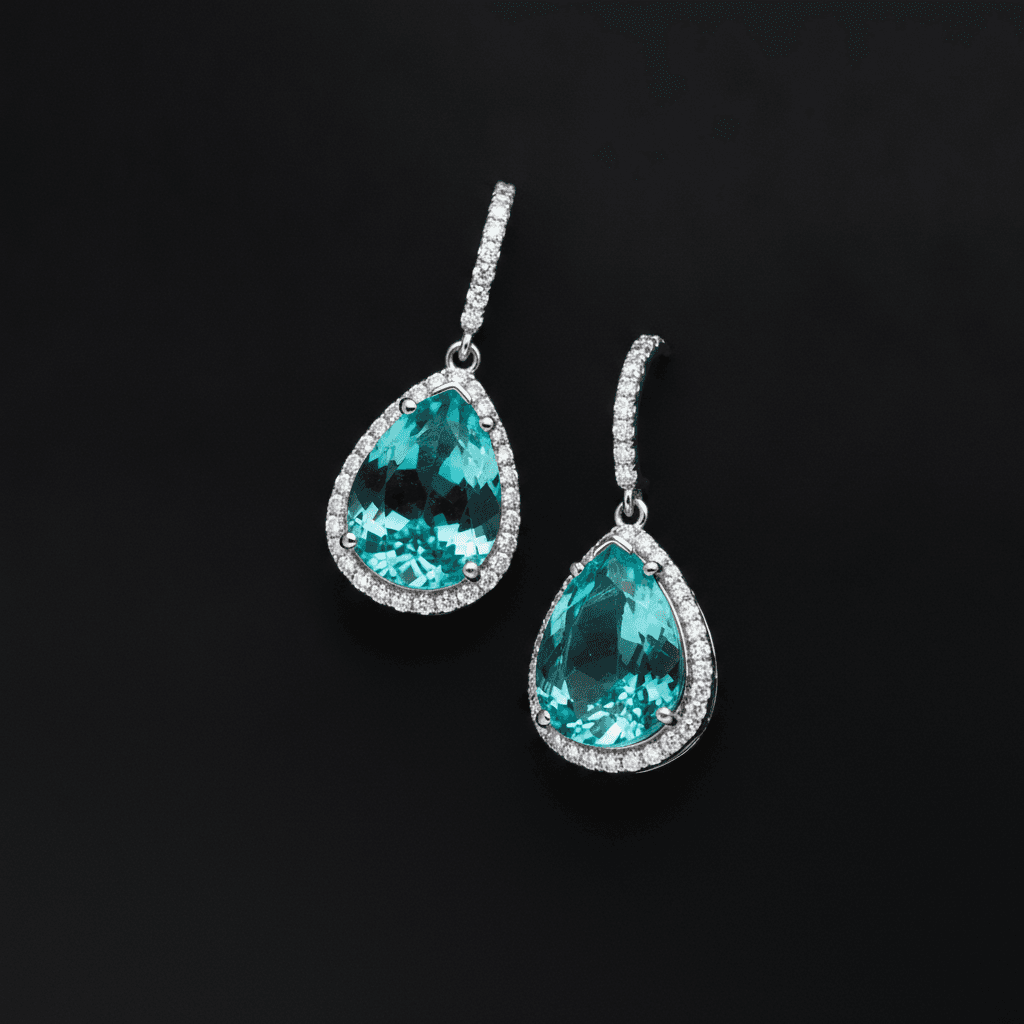
Copper-bearing tourmaline can show vivid blue, greenish-blue, or violet hues. Paraíba first referred to material from the Brazilian state of Paraíba, and laboratory origin terminology is more specific than a seller's color impression. GIA can provide an origin opinion for qualifying tourmaline when testing supports it. A vivid color alone does not prove copper content or locality.
How quality is evaluated
Color, clarity, cut, and size matter, but expectations vary by variety. Bright, strongly saturated red, blue, and green colors attract attention, while overly dark tone can reduce visible brightness. Personal preference remains relevant, and a trade name should not replace a direct color description.
Clarity varies with color and formation. Pink-to-red tourmaline often contains more visible inclusions than green-to-blue material. Some inclusions can reduce transparency or create durability concerns; others may be accepted when color is exceptional. A cat's-eye effect requires appropriate aligned inclusions and cabochon cutting, but the effect should be examined under a moving point light rather than inferred from one photograph.
Tourmaline crystals are often elongated, so long rectangles, emerald cuts, and narrow shapes are common. Inspect for windowing, dark extinction, chips at corners, and abrasion. Compare dimensions with weight and do not assume a large face-up stone has a specific carat weight from an image.
Avoid fixed value tables. Variety, color, clarity, size, cutting, treatment, documented copper content, origin opinion, condition, and current demand all affect market comparison.
Treatments, synthetics, and imitations
Tourmaline can be heated or irradiated to alter color. GIA notes that irradiation-related color in some stones may fade with heat or bright light. Fracture filling and surface coatings are also possible, although not every tourmaline receives treatment.
The seller should disclose known treatment and any special care it creates. A laboratory report can identify tourmaline, note detectable treatment, and for certain stones offer a geographic-origin opinion. GIA evaluates tourmaline but does not issue one universal AAA-style grade.
Other natural gems and manufactured materials can imitate tourmaline colors, while assembled stones can imitate zoning. Color bands, bubbles, or inclusions seen through a loupe are observations, not a complete home authentication test.
Durability and jewelry use
Tourmaline ranks about 7 to 7.5 on the Mohs scale. It is suitable for many jewelry types, but it should be protected from hard blows and high heat. Long stones and exposed corners can be vulnerable, especially in rings and bracelets.
Remove tourmaline jewelry before sports, heavy work, gardening, or chemical exposure. Tell the jeweler the stone identity and known treatment before repair because torch heat can alter color or damage fractures.
Cleaning and storage
GIA recommends warm soapy water for tourmaline. Use a soft brush on a secure setting, rinse, and dry gently. Heat can damage tourmaline, so steam is not a safe default. Ultrasonic cleaning should be avoided when fractures or filling are present; gentle manual cleaning is preferable when treatment and condition are unknown.
Store pieces separately from harder gems. Protect slices, thin edges, and elongated corners from pressure during travel.
A practical buying checklist
- Ask for the exact material and variety description.
- Describe color under neutral and indoor light without relying only on a trade name.
- Request disclosure of heat, irradiation, filling, coating, or other treatment.
- Treat copper-bearing and geographic-origin claims as laboratory questions.
- Inspect zoning, windowing, dark areas, inclusions, chips, and setting condition.
- Verify any report directly and confirm its measurements match the item.
- Avoid claims of guaranteed rarity, investment return, or mine origin based on appearance.
The practical conclusion
Tourmaline's value as a topic comes from its real mineral and color diversity. A useful guide explains the names, shows how quality factors vary, and separates visible appearance from laboratory conclusions. That approach gives buyers better questions without promising that a bright blue or watermelon pattern proves identity, origin, or value.
Want more jewelry knowledge?
Download our app for quizzes, care guides, and AI identification