How to Store Silver and Remove Tarnish Conservatively
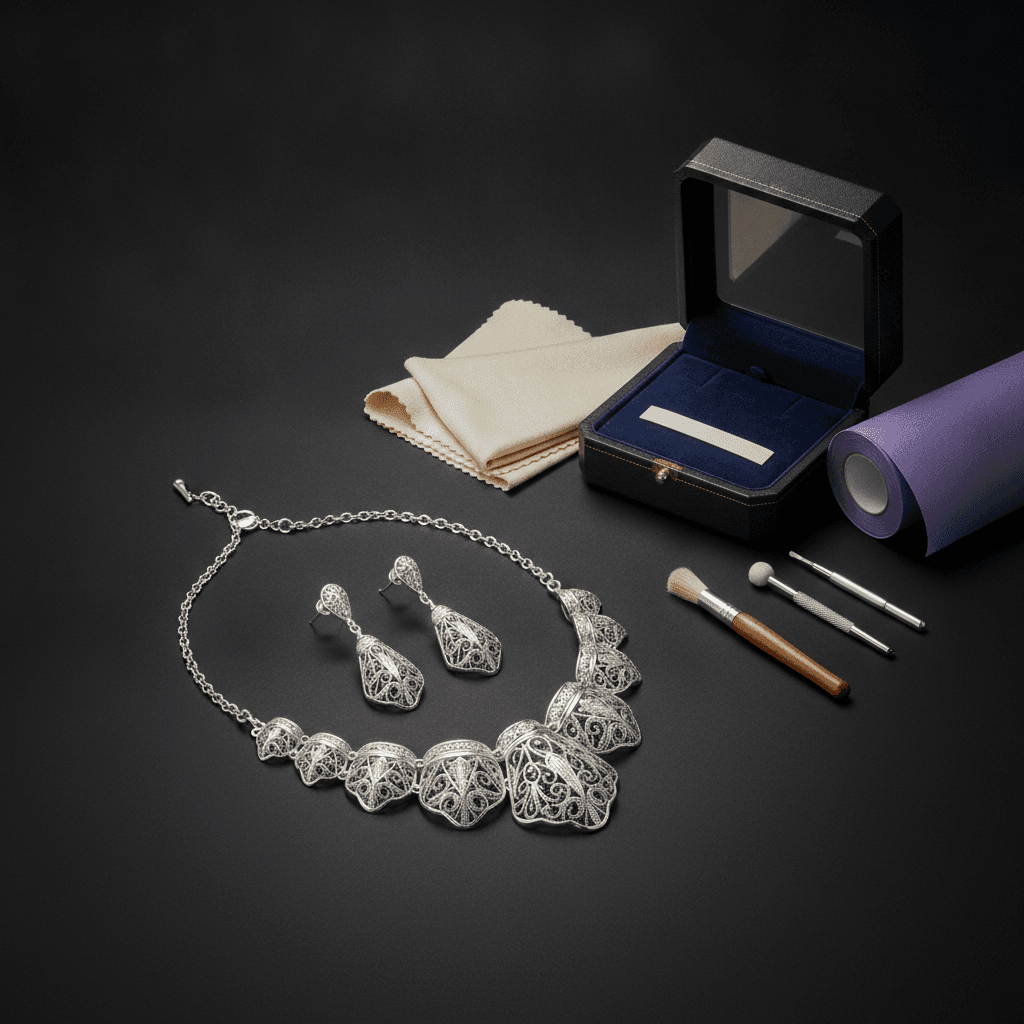
The safest silver-care plan gives prevention priority over repeated tarnish removal. Store a clean, dry piece in a suitable closed container, keep it away from sulfur-emitting materials, inspect it before cleaning, and remove only as much tarnish as the intended use requires. Every polishing or chemical treatment can change the surface.
For the chemistry behind yellow, blue, and black films, see why silver tarnishes. This page focuses on storage and action.
Examine the entire object before cleaning
First determine whether the piece appears to be solid silver, silver plated, gilded, hollow, stone-set, enamelled, repaired, or made from several materials. Look for marks, exposed base metal, solder joins, loose settings, cracks, porous stones, glued parts, fabric pads, wood, bone, ivory, or sealed hollow sections. Photograph the condition before doing anything.
This examination decides which methods are unsafe. Immersion can carry liquid into hollow handles, lined boxes, closed cavities, or adhesive-set jewelry. Polish can remove gilding, blur engraving, expose base metal through thin plating, or collect in recesses. A method suitable for an undecorated sterling spoon may be wrong for an antique brooch.
If the object is valuable, archaeological, antique, heavily plated, deliberately patinated, structurally weak, or made from uncertain materials, stop and consult a qualified conservator. The objective may be stable preservation rather than a bright finish.
Set up storage that slows tarnish
Silver reacts with sulfur-containing gases, and humidity can speed the process. Choose a clean, dry storage location away from kitchens, bathrooms, heating vents, and large temperature swings. CCI’s conservation guidance recommends dry conditions below 50% relative humidity for silver. A basic humidity monitor is more useful than guessing from how the room feels.
Use a closed container to limit new pollutants. CCI recommends individual polyethylene bags for silver objects, supported or wrapped with sulfur-free, unbuffered acid-free tissue. A suitable tarnish-inhibiting cloth can add protection. Keep pieces separate so chains do not abrade pendants and hard stones do not scratch softer metal.
Avoid direct contact with rubber bands, latex, wool, felt, unknown foam, newspaper, and unverified cardboard or adhesives. These materials may release sulfur compounds or other corrosive gases. Do not trap a damp, dirty, or recently washed object in a sealed bag; moisture and residues must be removed first.
Desiccated silica gel can help control humidity inside a sealed enclosure, while activated charcoal or a suitable commercial scavenger can reduce tarnishing gases. These products need monitoring or replacement according to their instructions. An exhausted packet is not permanent protection.
Handle silver without adding new residues
Clean, dry hands are adequate for many everyday jewelry pieces if you hold them briefly by sturdy areas. For stored objects or larger silverware, clean cotton or suitable disposable gloves can reduce fingerprints. Avoid gripping delicate settings, chains, or projecting decoration through gloves that reduce dexterity.
Remove cosmetics, perspiration, dust, and food residue after wear with a soft clean cloth if the object’s materials permit it. Keep perfumes, hair products, chlorine cleaners, and household chemicals away. Before returning an item to storage, check that it is fully dry and that no polishing compound remains in joins or recesses.
Inspect stored silver periodically. Look for fresh color change, dampness, crumbling lining, green residue near copper-containing areas, loose stones, or plating loss. Finding the source early can prevent a cycle of increasingly aggressive cleaning.
Decide whether tarnish needs to be removed
Tarnish is not automatically an emergency. It may be visually unwanted, but a stable dark surface can slow subsequent tarnishing. On relief work, intentional contrast or an old surface may also be part of the design. Define the desired appearance before touching the object.
Clean loose dust and grime before trying to remove tarnish. Dragging grit under a polishing cloth produces scratches. For a straightforward, sturdy silver object that can safely contact water, CCI describes cleaning with a suitable detergent in distilled water, followed by a distilled-water rinse and thorough drying. Jewelry with gemstones, adhesives, springs, hollow parts, or mixed materials needs material-specific advice instead of automatic immersion.
Use the least abrasive suitable method
All abrasive polishing removes some tarnish and some underlying silver. General-purpose metal polish is more aggressive than a product designed for silver. A silver polishing cloth can be useful for light tarnish on a robust, appropriate surface, but it is still abrasive. Use light pressure and stop once the intended appearance is reached.
Avoid scrubbing marks, edges, engraving, plated high points, or delicate chains. Do not use toothpaste, baking-soda paste, kitchen scouring powder, or an improvised abrasive. These methods offer little control over particle size and scratch pattern.
Chemical dips can over-clean recesses, pit metal, harm organic or mixed materials, and remain trapped inside cavities. Electrochemical aluminum-and-carbonate methods also alter the surface and can leave it dull or create problems if the setup or rinsing is poor. Neither method should be a universal internet recipe. A conservator may use controlled chemical or electrochemical treatment for a suitable object, but that is different from submerging unknown jewelry at home.
Treat plated and composite pieces as higher risk
Silver plate is a thin silver layer over another metal. Each abrasive treatment consumes part of that layer, and exposed base metal cannot be restored by more polishing. Stop if high points begin to show a different color or if the surface becomes uneven.
Composite objects combine incompatible cleaning needs. Pearls, turquoise, opal, coral, enamel, adhesive-set stones, oxidized details, and many vintage coatings may be damaged by products tolerated by bare silver. Steel springs can rust after immersion. Copper-containing solder or base metal can react with residues. A professional should choose a method after identifying these materials.
A repeatable silver-care routine
- Photograph the piece and inspect its materials, joins, and condition.
- Remove loose dust without rubbing grit across the surface.
- Decide whether tarnish removal is needed for wear, display, or preservation.
- Test the gentlest suitable method on a discreet area when appropriate.
- Avoid immersion unless every component can tolerate it.
- Remove cleaning residue and dry the object completely.
- Store it separately in a suitable closed enclosure with safe materials.
- Monitor humidity, scavengers, and the object’s condition over time.
Good silver care is measured by how little material and evidence are lost, not by how quickly the surface becomes mirror-bright.
Want more jewelry knowledge?
Download our app for quizzes, care guides, and AI identification